




What's Happening?
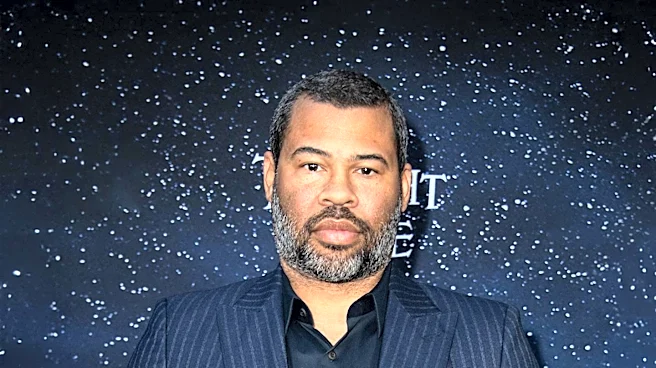
Jordan Peele's groundbreaking film 'Get Out' has significantly altered the landscape and expectations for Black horror movies, according to an editorial. While Peele is lauded for opening doors for Black filmmakers in the genre, his success has inadvertently
created a new standard where Black horror films are now widely expected to incorporate deep social commentary, particularly on themes of race, racism, and the Black experience in America. Before 'Get Out,' Black horror encompassed a broader range of narratives, including films like 'Tales from the Hood' and 'Candyman' that explored social issues, but also movies like 'Blacula' and 'Ganja & Hess' that focused purely on supernatural or psychological scares without explicit social metaphors. The current expectation is that Black horror must be 'meta' and provoke discussions about race, moving beyond simply delivering scares.
Why It's Important?
This shift in expectation is significant because it potentially limits the creative freedom of Black horror filmmakers. While Peele's work has undeniably elevated the genre and brought critical acclaim, it has also created a prescriptive mold. Filmmakers of color might feel pressured to produce films that align with this new expectation for social commentary, potentially sidelining projects that aim solely to entertain or explore other facets of horror. This could lead to a narrower scope of storytelling within Black horror, contrasting with the broader creative license often afforded to white horror directors who can make films purely for their scare factor without the added burden of social messaging. The importance lies in the potential for both advancement and constraint within a creative field that has historically struggled for diverse representation.
What's Next?
The ongoing discussion around the expectations set by Jordan Peele's success suggests a future where Black horror filmmakers may either lean into the demand for social commentary or actively push back to reclaim broader creative freedom. There could be a rise in films that intentionally defy the 'meta' expectation, focusing on diverse subgenres of horror without explicit racial themes, to demonstrate that Black horror is not a monolith. Conversely, the success of socially conscious horror may continue to inspire more films that blend scares with profound societal critiques. The industry will likely see a continued debate about the balance between artistic expression and audience expectations, potentially leading to a more varied output as filmmakers navigate these pressures.
Beyond the Headlines
The deeper implication of this phenomenon touches upon the broader issue of representation and the burden placed on minority artists. When a groundbreaking work from a marginalized group achieves mainstream success, there's often an unconscious expectation that all subsequent works from that group must follow a similar path or carry a similar weight of representation. This can inadvertently stifle innovation and diversity within the group's artistic output. For Black horror, it highlights a cultural expectation that Black art must always 'teach' or 'comment' on the Black experience, rather than simply 'be.' This raises questions about equitable creative freedom and whether artists from underrepresented communities are truly allowed the same artistic latitude as their majority counterparts.