





What's Happening?
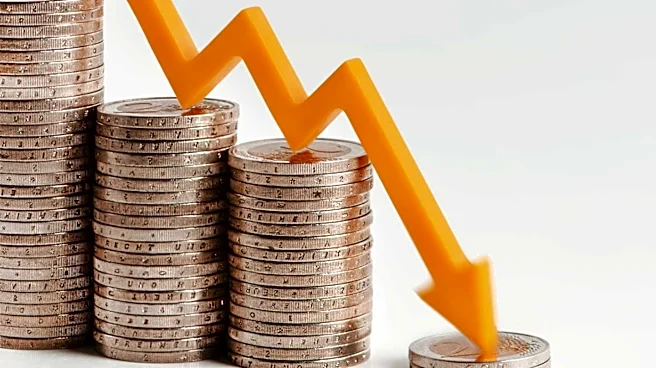
S&P Global Ratings has revised Poland’s sovereign credit outlook from stable to negative and lowered its long-term local-currency rating from A to A-. The foreign-currency rating remains at A-. This decision, announced on November 6, is primarily driven
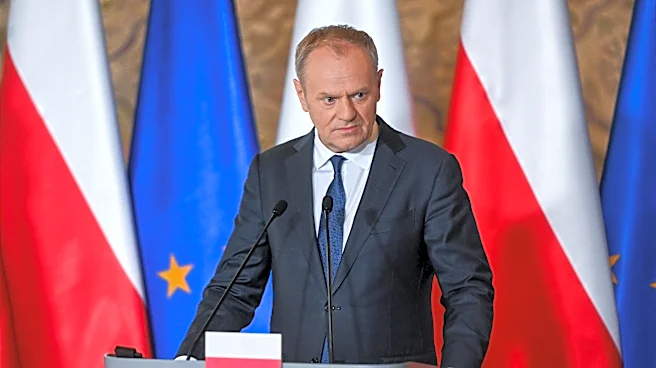
by a significant increase in public debt and persistent fiscal deficits. S&P projects Poland’s general government deficit to reach 7.1% of GDP in both 2026 and 2027, before a slight reduction to 6.2% in 2028. Net government debt is anticipated to exceed 70% of GDP by 2029, a substantial rise from 53% in 2025. These fiscal pressures are attributed to high defense spending, increased social expenditures, and elevated public-sector wage costs. Political polarization, particularly President Karol Nawrocki’s veto powers impacting Prime Minister Donald Tusk’s agenda, further complicates fiscal consolidation efforts ahead of the 2027 parliamentary election. Despite these challenges, Poland’s economy is expected to maintain an average GDP growth of approximately 3% between 2027 and 2029.
Why It's Important?
The downgrade of Poland's credit outlook by S&P Global Ratings signals potential financial instability that could have broader implications for the U.S. and global markets. As a key NATO ally and a significant economy in Central Europe, Poland's fiscal health is crucial for regional stability. A negative outlook can lead to increased borrowing costs for the Polish government, making it more expensive to finance its debt and public services. This could, in turn, affect foreign investment, including from U.S. companies, and potentially slow economic growth. The U.S. has a vested interest in the economic stability of its allies, as economic weakness can undermine military capabilities and political cohesion within alliances. The fiscal challenges in Poland, driven by defense spending and social programs, reflect a common dilemma faced by many nations balancing security needs with economic prudence, a situation that U.S. policymakers often monitor closely.
What's Next?
Poland faces the immediate challenge of implementing fiscal adjustments to address its rising debt and deficits. This will likely involve difficult policy choices regarding government spending and revenue generation. The warning from S&P about potential painful fiscal adjustments if borrowing costs increase or constitutional debt limits are reached suggests that the government may need to prioritize spending or seek new revenue streams. The political polarization noted by S&P could hinder these efforts, especially with the 2027 parliamentary election approaching. The government will need to navigate these political complexities to achieve consensus on necessary reforms. The resilient economic growth forecast by S&P offers some buffer, but sustained fiscal discipline will be critical to stabilize the outlook and potentially reverse the negative trend in credit ratings.
Beyond the Headlines
The situation in Poland highlights the intricate relationship between national security, social welfare, and economic stability. The significant defense spending, while necessary for national security in a volatile region, directly contributes to fiscal strain. This creates a policy tightrope walk for the government, balancing the imperative to protect its borders and fulfill NATO commitments with the need to maintain a healthy economy and provide social services. The political dynamics, particularly the interplay between the President and Prime Minister, underscore how domestic political divisions can impede critical economic reforms. This scenario is not unique to Poland and reflects a broader trend in democratic nations where competing priorities and political fragmentation can complicate long-term fiscal planning and economic resilience.