




What's Happening?
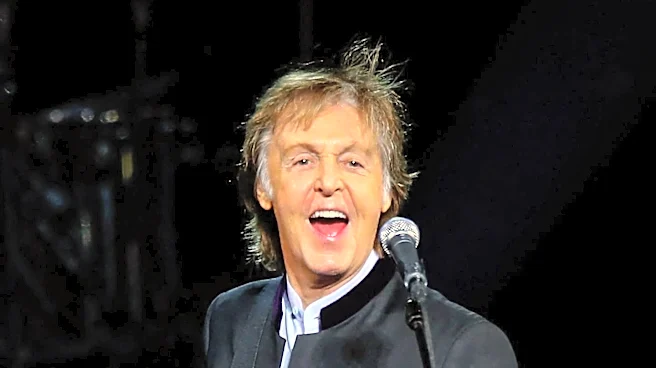
Paul McCartney, renowned for his work with The Beatles and his solo career, released an album in 2012 titled 'Kisses on the Bottom'. This album marked a significant departure from his usual rock and pop style, as it focused on jazz standards and nostalgic
tunes reminiscent of the 1920s. McCartney, known for his versatility and forward-thinking approach to music, embraced this project as a way to explore his musical roots and pay homage to the classic songwriters he admired, such as Harold Arlen and Cole Porter. The album includes both covers of classic songs and original compositions by McCartney, showcasing his ability to adapt and thrive in different musical genres.
Why It's Important?
The release of 'Kisses on the Bottom' highlights McCartney's enduring influence and adaptability in the music industry. By venturing into jazz standards, McCartney not only broadened his musical repertoire but also introduced a new generation to the timeless appeal of classic songwriting. This move underscores the importance of musical diversity and the ability of established artists to reinvent themselves. For the music industry, McCartney's album serves as a reminder of the value of musical heritage and the potential for cross-generational appeal. It also reflects the ongoing relevance of artists from the rock era in contemporary music culture.
What's Next?
While 'Kisses on the Bottom' was a unique project for McCartney, it is likely that he will continue to explore various musical styles in future works. His willingness to experiment with different genres suggests that fans can expect more innovative projects that blend his classic sound with new influences. Additionally, McCartney's exploration of jazz standards may inspire other artists to revisit and reinterpret classic music, potentially leading to a resurgence of interest in traditional songwriting techniques.
Beyond the Headlines
McCartney's decision to create an album of jazz standards also touches on broader cultural themes, such as the preservation of musical history and the role of nostalgia in art. By revisiting the music of the past, McCartney not only honors the legacy of early 20th-century songwriters but also bridges the gap between different musical eras. This project highlights the cyclical nature of music trends and the enduring impact of classic compositions on modern artists. It also raises questions about the balance between innovation and tradition in the music industry.