



What's Happening?
Boston Closet Co., a company specializing in custom storage solutions since 1976, is emphasizing the growing need for tailored home office setups as remote and hybrid work models become permanent fixtures in the U.S. workplace. The company notes that
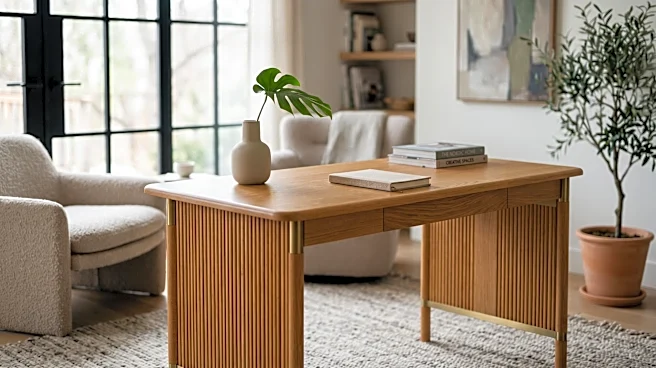
many individuals initially adapted to working from home using makeshift arrangements like kitchen tables or bedroom corners, which often lead to clutter and inefficiency. A custom home office, as described by Boston Closet Co., involves built-in desks, cabinets, shelving, and lighting designed to fit a specific room and individual work habits. This approach aims to create a dedicated, organized workspace that reduces clutter, improves focus, and enhances productivity, whether an individual works remotely one day a week or full-time. The company highlights that such custom solutions also present a professional background for video calls, eliminating the need for blurred virtual backgrounds.
Why It's Important?
The shift towards permanent remote and hybrid work arrangements has significant implications for U.S. households and the home improvement industry. As more Americans spend a substantial portion of their workweek at home, the demand for functional and ergonomic home office spaces is increasing. This trend benefits companies like Boston Closet Co., which offer specialized design and installation services, and impacts related sectors such as furniture manufacturing, interior design, and smart home technology. For employees, a well-designed home office can lead to improved well-being, reduced stress from disorganization, and enhanced productivity, potentially blurring the lines between work and personal life if not properly managed. Conversely, a poorly designed home office can contribute to burnout and decreased efficiency, underscoring the importance of investing in appropriate workspace solutions.
What's Next?
The demand for custom home office solutions is expected to continue growing as companies solidify their remote work policies. Boston Closet Co. and similar businesses will likely see sustained interest in their services, potentially leading to innovations in modular designs, smart storage, and integrated technology solutions for home workspaces. Consumers will increasingly prioritize ergonomic furniture, efficient storage, and aesthetically pleasing designs that blend with their home decor. This trend may also influence residential real estate, with dedicated office spaces becoming a more sought-after feature in new constructions and home renovations. Furthermore, the emphasis on professional video call backgrounds could drive demand for integrated lighting and backdrop solutions within custom office designs.
Beyond the Headlines
The rise of custom home offices reflects a broader cultural shift in how Americans perceive and utilize their living spaces. Homes are no longer solely personal sanctuaries but have increasingly become integrated work environments. This blurs the traditional boundaries between professional and private life, raising questions about work-life balance and the psychological impact of constant proximity to one's workplace. The investment in custom home offices also signifies a long-term commitment to remote work, suggesting that this is not a temporary phase but a fundamental change in employment structures. This evolution could lead to new legal and ethical considerations regarding employer responsibilities for home office setups, tax implications for home-based businesses, and the overall impact on urban planning and commercial real estate.