




What's Happening?
First-generation K-pop groups, such as Fin.K.L and Fly To The Sky, are making a comeback, fueled by a broader Y2K cultural revival and the emergence of new digital platforms. These platforms are instrumental in exposing older music to younger audiences
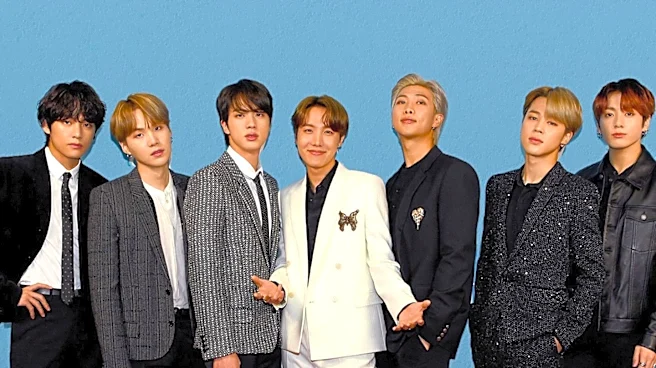
who may not have been familiar with these artists during their initial peak. Social media, in particular, plays a crucial role, alongside current K-pop idols performing older songs, which helps these reunions gain traction globally. This phenomenon extends the reach of these comebacks beyond their original South Korean fanbase, attracting overseas listeners who are increasingly exploring the historical roots of K-pop. The global success of contemporary K-pop acts like BTS has created a 'gravitational pull,' drawing international fans to investigate the genre's earlier legends. This renewed interest means that the potential audience for these returning groups now includes younger South Koreans discovering the music years later, as well as international fans tracing K-pop's evolution.
Why It's Important?
The resurgence of first-generation K-pop groups signifies a significant shift in how music consumption and cultural trends are influenced by digital platforms and global interconnectedness. For the music industry, this trend highlights the enduring commercial viability of legacy artists, especially when coupled with effective digital strategies. It demonstrates that nostalgia, combined with new avenues for discovery, can create substantial new markets for older content. For K-pop as a global cultural export, this development deepens its historical narrative and broadens its appeal, allowing new fans to engage with its foundational artists. This expansion of the K-pop ecosystem benefits not only the returning artists but also the broader Korean entertainment industry by showcasing its rich history and diverse talent. The ability of social media to bridge generational and geographical gaps in music appreciation underscores its power in shaping contemporary cultural landscapes and creating new economic opportunities for artists from different eras.
What's Next?
The success of these first-generation K-pop comebacks is likely to encourage more acts from previous generations to consider returning to the spotlight. Industry officials note that many of these groups still possess powerful fandoms, albeit older ones, and the current wave of successful reunions provides a blueprint for future comebacks. Agencies and artists will likely continue to leverage social media and collaborations with current idols to reintroduce their music to a wider audience. This trend could lead to a more diverse K-pop landscape, where older and newer generations of artists coexist and influence each other. Furthermore, the continued global interest in K-pop's history suggests that content creators and platforms will increasingly focus on curating and promoting archival K-pop content, potentially leading to new documentaries, retrospectives, and digital re-releases. The ongoing Y2K cultural revival is expected to sustain this interest, ensuring that the influence of these pioneering groups continues to be felt.
Beyond the Headlines
This phenomenon extends beyond mere musical nostalgia, touching upon deeper cultural and sociological implications. The revival of first-generation K-pop reflects a broader societal yearning for 'monoculture' in an increasingly fragmented media environment. In an era dominated by short-form content and individualized consumption, the shared experience of rediscovering and celebrating these older acts offers a sense of collective cultural memory. For international fans, exploring these earlier K-pop groups provides a richer understanding of the genre's evolution and its cultural context, moving beyond the contemporary global hits. This 'gravitational pull' towards K-pop's past also highlights the power of cultural exports to create a continuous, evolving narrative that transcends geographical and linguistic barriers. It underscores how digital platforms are not just tools for new content but also powerful archives that can breathe new life into historical cultural artifacts, fostering intergenerational and intercultural dialogue through music.