




What's Happening?
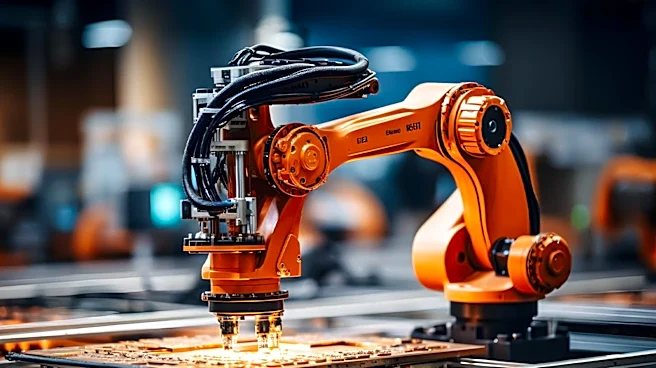
Artificial intelligence is being increasingly integrated into the fashion industry to optimize garment production, leading to significant reductions in time and waste. While traditional design methods like hand sketching and Illustrator flats remain foundational,
AI tools are augmenting these processes by providing clearer visual communication and minimizing misinterpretations among design, merchandising, buying, development, and manufacturing teams. This integration allows for faster concept-to-lineup cycles, fewer wasted samples, reduced feedback loops, and fewer tech-pack revisions. AI enables designers to explore and evaluate entire collections as complete systems, considering color stories, proportions, and commercial relevance simultaneously, rather than developing isolated looks. This shift transforms AI from a mere ideation tool into an integral part of the design and decision-making workflow, fostering more efficient and repeatable collection development processes.
Why It's Important?
The adoption of AI in garment production holds substantial importance for the U.S. fashion industry, impacting efficiency, sustainability, and economic competitiveness. By accelerating the concept-to-lineup phase by 50-70% and reducing sample waste by 25-40%, AI directly addresses critical industry challenges such as speed-to-market and environmental impact. This efficiency gain can lead to significant cost savings for businesses, allowing them to allocate resources more effectively and potentially offer more competitive pricing. Furthermore, the reduction in feedback loops and tech-pack revisions improves collaboration across the supply chain, from designers to factories, minimizing errors and rework. For consumers, this could translate into more trend-responsive collections and potentially more sustainable products due to reduced waste. The shift towards AI-augmented workflows also necessitates a re-evaluation of skill sets within the industry, emphasizing the need for designers to integrate AI exploration with their creative judgment and commercial strategy, ensuring the U.S. fashion sector remains at the forefront of innovation.
What's Next?
The next phase for the fashion industry involves moving beyond experimental AI use to building repeatable, scalable processes around it. This means integrating human creativity, AI exploration, design judgment, commercial strategy, and efficient execution into a cohesive workflow. Fashion organizations are now tasked with identifying how AI can become a permanent part of the actual product-creation process, rather than just an experimental tool. This will likely involve further development and adoption of AI platforms that can generate realistic images and videos for marketing, requiring strong visual aesthetics and prompt engineering skills from designers. Educational initiatives, such as the 'AI Fashion House Academy' by David Kollar, are emerging to equip mid-career designers and boutique owners with the skills to leverage AI for rapid prototyping, mood board generation, 3D garment rendering, and production-ready tech packs. The industry is poised for a transformation where AI facilitates better design, faster decision-making, and the elimination of repetitive tasks, allowing designers to focus on their core creative vision.
Beyond the Headlines
The integration of AI into fashion design extends beyond mere efficiency, touching upon deeper ethical and cultural implications. While AI promises to streamline production and reduce waste, it also raises questions about the future of traditional design roles and the potential for algorithmic influence on aesthetic trends. The emphasis on 'human creativity + AI exploration' suggests a collaborative future, but the balance of power between human intuition and machine-generated insights will be a continuous point of discussion. There's a subtle shift in the designer's role from sole creator to curator and guide of AI tools, requiring new skills in prompt engineering and data interpretation. Furthermore, the ability of AI to generate 'realistic images and videos for marketing campaigns' could lead to new forms of digital fashion and virtual experiences, blurring the lines between physical and digital garments. This evolution could also democratize design by making advanced tools more accessible, but it also poses challenges in maintaining brand authenticity and preventing homogenization of styles if not carefully managed.