
What's Happening?
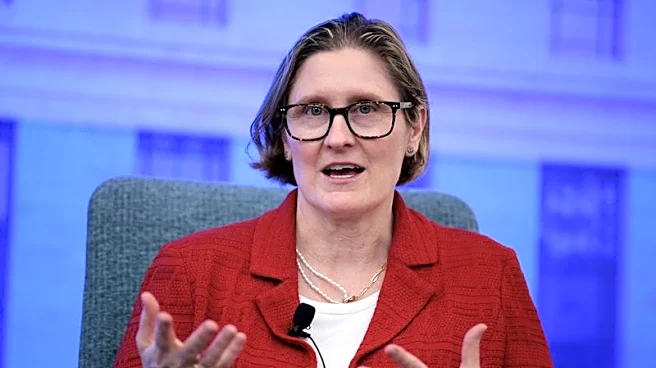
Federal Reserve Governor Lisa Cook has indicated her willingness to support an increase in interest rates if inflation does not show signs of easing. Speaking at the 2026 Economic Luncheon of the Anchorage Economic Development Corporation, Cook emphasized
that the risks associated with inflation currently outweigh those related to the labor market. She noted that the Federal Reserve is running out of time to wait for disinflation to occur naturally. Cook highlighted that inflation, as measured by the personal consumption expenditures price index, stood at 3.7% in June, significantly above the Fed's 2% target. She expressed concern that prolonged high inflation could become entrenched in price- and wage-setting behaviors, making it more challenging to control.
Why It's Important?
The potential decision to raise interest rates is significant as it reflects the Federal Reserve's commitment to controlling inflation, which can have widespread economic implications. Higher interest rates could slow down economic growth by increasing borrowing costs for consumers and businesses. This move could impact sectors such as housing, where mortgage rates might rise, and consumer spending, as credit becomes more expensive. On the other hand, controlling inflation is crucial to maintaining the purchasing power of the dollar and ensuring economic stability. Stakeholders such as businesses, investors, and policymakers will closely monitor these developments, as they could influence economic strategies and financial markets.
What's Next?
If inflation continues to remain high, the Federal Reserve may proceed with raising interest rates. This decision will likely be influenced by upcoming economic data and inflation trends. The Federal Open Market Committee (FOMC) will play a critical role in determining the timing and magnitude of any rate hikes. Market participants and analysts will be watching for signals from other Fed officials and economic indicators that could provide insights into the Fed's future policy direction. Additionally, external factors such as geopolitical tensions and global economic conditions could also impact the Fed's decision-making process.