








What's Happening?
On the fifth day of the 2026 World Cup, matches in Groups G and H ended in draws, leaving all teams with equal points. In Group G, Egypt initially took the lead, but an own goal resulted in a draw. Iran and New Zealand also ended their match in a 2-2
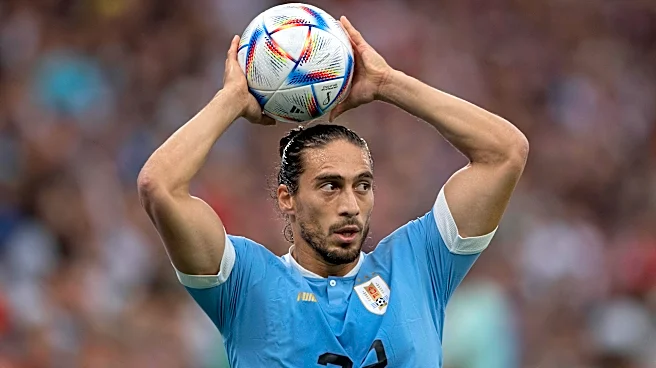
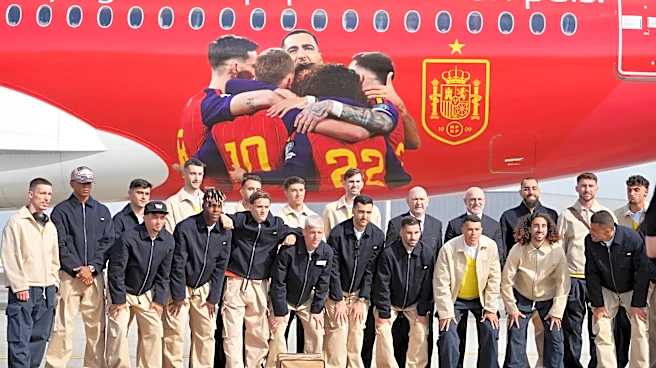
draw, placing them at the top of the group based on goals scored. In Group H, Spain and Uruguay, despite their dominance, could not secure victories. Cape Verde held Spain to a draw, while Saudi Arabia and Uruguay also ended in a stalemate. The matches were marked by strong defensive performances, particularly from the goalkeepers of Saudi Arabia and Cape Verde.
Why It's Important?
The draws in these matches highlight the competitive nature of the World Cup, where even traditionally strong teams like Spain and Uruguay face challenges. This parity increases the stakes for the next round of matches, as all teams will be eager to secure a win to avoid early elimination. The results also emphasize the unpredictability of the tournament, where underdog teams like Cape Verde can hold their own against more established football nations. This dynamic can impact team strategies and fan expectations as the tournament progresses.
What's Next?
As all teams in Groups G and H are tied, the upcoming matches will be crucial for determining which teams advance to the knockout stages. Teams will likely adjust their strategies to be more aggressive in pursuit of a win. The pressure is on for teams like Spain and Uruguay to demonstrate their capabilities and secure their positions in the tournament. Fans and analysts will be closely watching to see if any team can break the current deadlock and emerge as a frontrunner.