
What's Happening?
Gold prices remained stable near $4,050 per ounce in late-afternoon U.S. trading, as crude oil prices retreated from recent highs and Treasury yields eased. The U.S. dollar held near recent highs, contributing
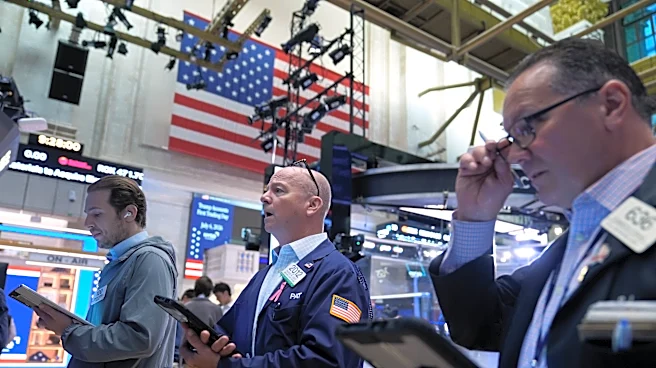
to the mixed performance of equities. North American equities closed with mixed results, with the Dow Jones Industrial Average gaining while technology shares faced pressure. European equities closed higher, supported by falling oil prices and positive earnings reports. The market is closely watching economic data and geopolitical developments, particularly in the Strait of Hormuz, which remains a point of tension.
Why It's Important?
The stability in gold prices amid fluctuating oil prices and mixed equity performance highlights the complex interplay between commodities, currencies, and equities. Gold's role as a safe-haven asset is underscored by ongoing geopolitical tensions and economic uncertainties. The market's response to these factors can influence investor behavior and asset allocation strategies. Additionally, the Federal Reserve's upcoming policy decision and economic data releases will be critical in shaping market expectations and influencing asset prices.
What's Next?
Traders are closely monitoring the Federal Reserve's policy meeting, Q2 GDP data, and the Fed's preferred PCE inflation measure for insights into future monetary policy. Geopolitical developments, particularly in the Strait of Hormuz, will continue to impact market sentiment and commodity prices. A sustained move in gold prices above key resistance levels could signal a shift in market dynamics, while a break below support levels may indicate increased volatility. Investors are advised to remain cautious and consider potential market fluctuations as these factors evolve.