






What's Happening?
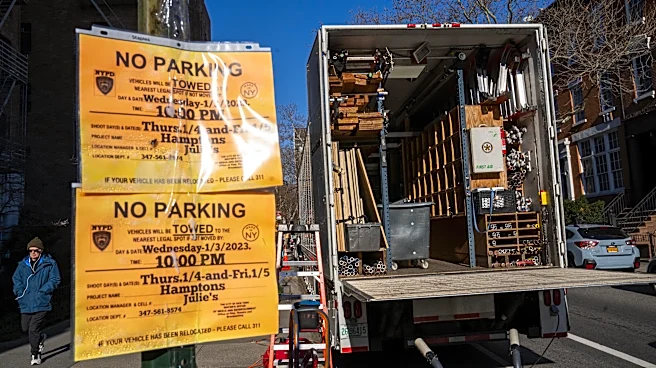
Sergio Leone's epic film 'Once Upon a Time In America,' set in New York from the 1920s to the 1960s, extensively used a variety of international and domestic locations to recreate its historical settings. While parts of the film were shot in New York City,
including an entire city block that was reconstructed, many key scenes were filmed elsewhere. For instance, the 1920s 'Lower East Side' neighborhood, where characters Noodles and Max first meet, was actually filmed in Brooklyn on 8th Avenue South at Bedford Avenue, beneath the Williamsburg Bridge. Other significant locations included Hoboken Railway Station in New Jersey and the Don CeSar Beach Resort in St. Petersburg, Florida, which stood in for old Manhattan. Unexpectedly, New York's 'Grand Central Station' in the 1930s flashbacks was portrayed by the Gare du Nord in Paris, and a lavish 'Long Island' restaurant scene was filmed at the Hotel Excelsior Venice on the Lido in Italy.
Why It's Important?
The extensive use of diverse global locations for 'Once Upon a Time In America' highlights the logistical complexities and creative solutions employed in large-scale film productions. This approach allowed director Sergio Leone to achieve a specific aesthetic and historical accuracy that might have been challenging or impossible to capture solely within contemporary New York. By utilizing locations in France and Italy, the production could access architectural styles and environments that authentically replicated earlier periods of New York, which had undergone significant modernization. This strategy underscores how filmmakers often transcend geographical boundaries to serve their artistic vision, demonstrating the global nature of film production and its reliance on international resources to create compelling narratives. The film's iconic imagery, such as the Manhattan Bridge, further cemented these carefully chosen locations in cinematic history.
Beyond the Headlines
The practice of using international locations to stand in for American cities, as seen in 'Once Upon a Time In America,' reveals a broader trend in filmmaking where authenticity and visual impact often dictate production choices over strict geographical accuracy. This approach can have economic implications, as it involves significant international travel and coordination, but it also allows for greater creative freedom. It challenges the audience's perception of reality, demonstrating how cinema constructs its worlds through careful selection and manipulation of environments. Furthermore, it highlights the enduring appeal of certain historical periods and urban landscapes, prompting filmmakers to seek out locations that can evoke a sense of nostalgia or a specific historical atmosphere, even if it means venturing far from the story's nominal setting. This globalized approach to location scouting continues to be a hallmark of major film productions, influencing both the visual language of cinema and the economic footprint of the industry.