



What's Happening?
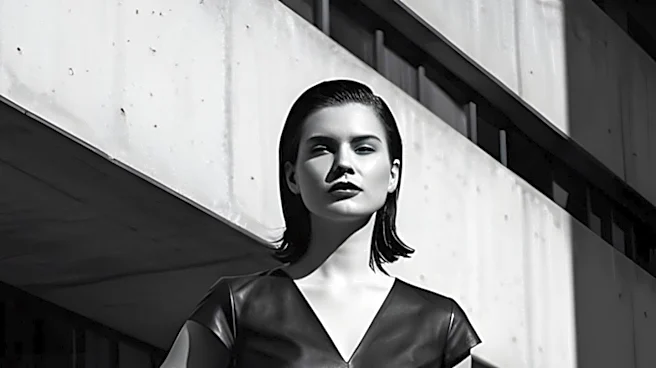
Bea Dalley, a graduate of the London College of Fashion, has adopted and integrated the 'mob wife aesthetic' into her photographic work. This stylistic choice is deeply influenced by her father's introduction to Martin Scorsese films, leading her to envision
herself as an 80s mob wife, specifically a Jamaican iteration. Dalley's approach to this aesthetic involves blending her personal life, including candid moments with friends and family, with a glamorous and stylized portrayal of an imagined mob wife persona. The aesthetic is not merely a costume but a lens through which she captures and presents her experiences, creating a unique fusion of reality and cinematic fantasy. Her work reflects a deliberate artistic choice to explore themes of identity, glamour, and personal narrative through a specific cultural and cinematic archetype.
Why It's Important?
This development highlights a growing trend in fashion and photography where individuals draw inspiration from specific cultural archetypes and cinematic influences to define their personal and artistic styles. For the U.S. fashion and art industries, this signifies a continued interest in nostalgic themes and the reinterpretation of past eras through a contemporary lens. It also underscores the impact of popular culture, particularly film, on shaping aesthetic preferences and creative expressions. The 'mob wife aesthetic,' as embraced by Dalley, could influence broader fashion trends, photography styles, and even marketing campaigns seeking to evoke a sense of vintage glamour and strong female archetypes. This trend also reflects a broader societal fascination with narratives of power, luxury, and a certain rebellious spirit, which resonate with various consumer demographics.
What's Next?
The adoption of the 'mob wife aesthetic' by artists like Bea Dalley could lead to its increased visibility and influence within the fashion and photography sectors. We might see more designers, photographers, and content creators exploring similar themes, potentially leading to new collections, editorial spreads, and social media trends. This aesthetic could also inspire a resurgence in specific fashion elements associated with the 80s and the 'mob wife' archetype, such as bold jewelry, luxurious fabrics, and dramatic silhouettes. Furthermore, the intersection of personal narrative and stylized portrayal in Dalley's work may encourage other artists to delve deeper into how personal experiences can be transformed into compelling visual stories, pushing the boundaries of contemporary photography and fashion artistry.
Beyond the Headlines
Beyond its immediate impact on fashion and photography, the 'mob wife aesthetic' touches upon deeper cultural and psychological dimensions. It reflects a societal fascination with power dynamics, gender roles, and the allure of a certain 'forbidden' glamour often associated with organized crime narratives. Ethically, it raises questions about the romanticization of such figures, even if presented through a stylized lens. Culturally, it speaks to the enduring influence of cinematic portrayals on personal identity and artistic expression, demonstrating how fictional archetypes can become powerful tools for self-definition and creative exploration. This trend also highlights the ongoing dialogue between high fashion and street style, as well as the way individuals appropriate and transform cultural symbols to create unique personal statements.