






What's Happening?
Jay Puri, a longtime executive at Nvidia, is under scrutiny due to his relationship with Cenly Chen, a former senior executive at Super Micro Computer. The couple dated for several years and married in March 2026. This relationship has drawn attention
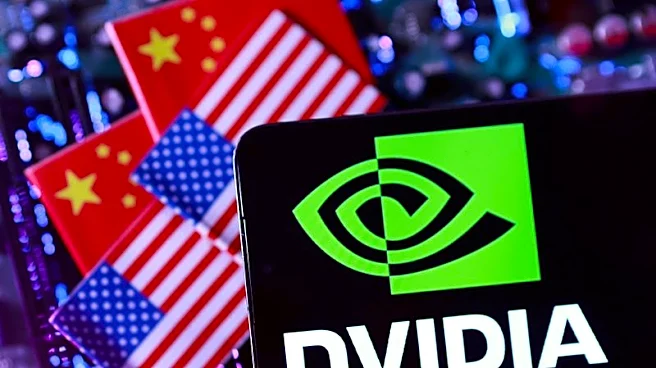
amidst a U.S. investigation into allegations that Super Micro servers, equipped with Nvidia chips, were illicitly diverted to China. Chen, who served as Super Micro's chief growth officer, frequently interacted with Puri as Super Micro sought access to Nvidia's chips for its clientele. While current reports do not confirm that Puri or Chen engaged in semiconductor smuggling or violated export controls, the situation underscores potential vulnerabilities in corporate governance when personal relationships intersect with commercial negotiations, strategic resource allocation, and regulatory compliance. The Wall Street Journal's investigation highlights these concerns, particularly given the strategic importance of advanced AI semiconductors.
Why It's Important?
The intersection of personal relationships and high-stakes commercial dealings in the semiconductor industry carries significant implications for U.S. economic competitiveness and national security. Advanced AI semiconductors are no longer merely commercial products; they are considered strategically vital technological assets with consequences for military capabilities and national security. The allegations of unauthorized transfers of advanced semiconductors to China, even if not directly linked to Puri or Chen, amplify the need for robust internal controls and transparent governance mechanisms within companies like Nvidia and Super Micro. Any perceived or actual conflict of interest could undermine trust in the allocation processes of critical technology, potentially impacting U.S. efforts to control the flow of sensitive technology to rival nations. This situation emphasizes that corporate governance failures in this sector can have far-reaching consequences beyond shareholder interests, touching upon technological sovereignty.
What's Next?
Semiconductor manufacturers and their commercial partners are likely to face increased pressure to implement and enforce rigorous conflict-of-interest policies, independently auditable allocation processes, and comprehensive export-control compliance programs. The ongoing U.S. investigation into the alleged diversion of Super Micro servers to China will continue to cast a shadow over the industry, potentially leading to stricter regulations or enforcement actions. Companies may need to review their internal governance structures to ensure that personal relationships among executives do not create actual or perceived conflicts that could compromise strategic decisions or regulatory adherence. The focus will remain on maintaining commercial integrity as a crucial component of technological sovereignty and national security, prompting a re-evaluation of oversight mechanisms within the semiconductor supply chain.
Beyond the Headlines
This situation brings to light the complex ethical and legal dimensions that arise when personal relationships intertwine with corporate responsibilities, especially in industries critical to national security. The case underscores the evolving nature of corporate governance, where the traditional focus on financial transparency is expanding to include geopolitical considerations and the strategic importance of technological assets. The potential for perceived conflicts of interest, even without proven misconduct, can erode public trust and invite regulatory scrutiny. It highlights a broader shift where the lines between commercial interests, personal ethics, and national security are increasingly blurred, demanding a higher standard of disclosure, independent oversight, and accountability from executives in critical technology sectors. This development could set precedents for how personal relationships among executives in sensitive industries are managed and disclosed in the future.