







What's Happening?
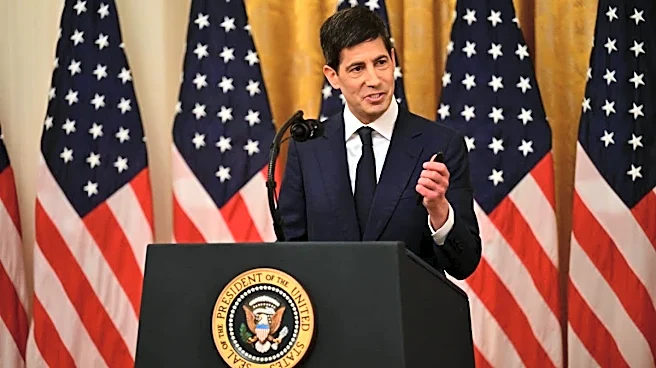
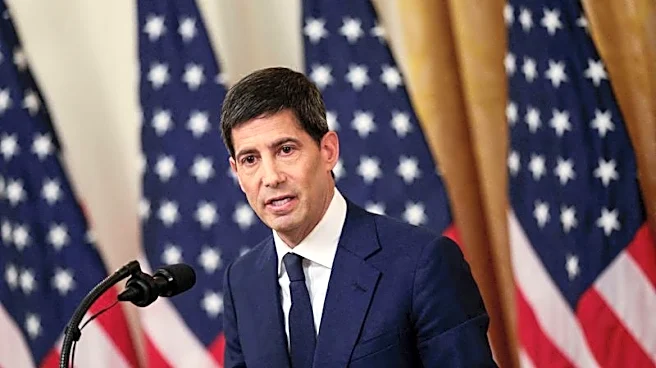
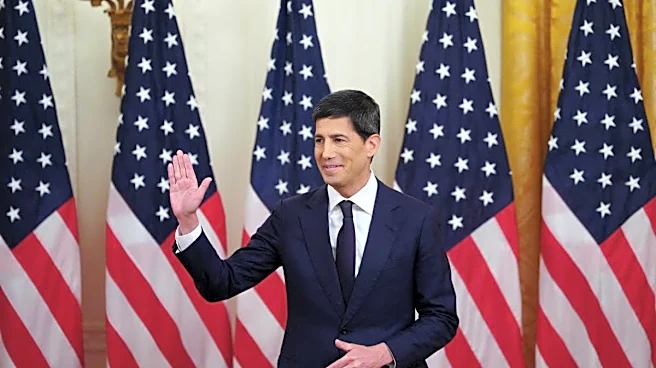
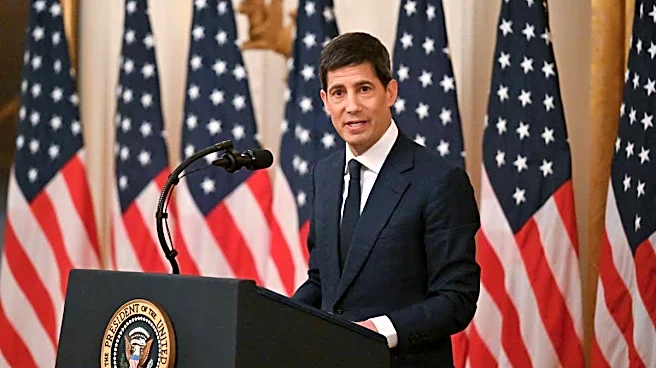
Kevin Warsh, the new chair of the Federal Open Market Committee (FOMC), has announced significant changes in the Federal Reserve's approach to monetary policy. In his first meeting as chair, the FOMC decided to keep interest rates steady, with a unanimous
vote from its leaders. Warsh has eliminated the Fed's forward guidance, opting for a more streamlined communication style compared to his predecessors. He emphasized the importance of financial markets reacting to real-time economic data rather than relying heavily on Fed predictions. Warsh plans to phase out traditional survey methods and focus on trends over specific numbers. He introduced the concept of task forces, which will consist of independent economic experts working alongside FOMC leaders to oversee new initiatives related to data handling, jobs, productivity, communication, inflation, and the balance sheet.
Why It's Important?
Warsh's approach marks a departure from the Fed's traditional methods, potentially impacting how financial markets interpret and react to economic data. By reducing reliance on Fed forecasts, Warsh aims to foster a more market-driven environment where financial markets respond to actual economic conditions. This shift could lead to increased volatility as markets adjust to the new paradigm. The introduction of task forces suggests a move towards more collaborative and specialized decision-making processes within the Fed, which could enhance the institution's adaptability to changing economic landscapes. However, critics express concerns about reduced transparency and the potential for increased uncertainty in financial markets.
What's Next?
The implementation of Warsh's proposed changes will likely be closely monitored by financial markets and economic stakeholders. The effectiveness of the task forces and the Fed's new communication strategy will be evaluated over time. Market participants may need to adjust their strategies to align with the Fed's evolving approach. Additionally, the Fed's ability to maintain its dual mandate of maximum employment and stable prices will be tested under Warsh's leadership. Stakeholders will be watching for any signs of increased market volatility or shifts in economic indicators as a result of these changes.