







What's Happening?
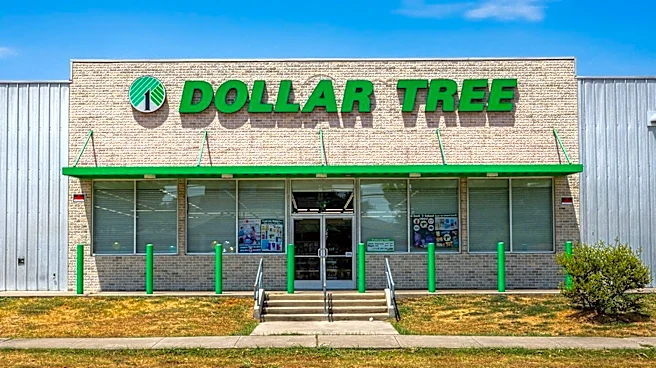
Dollar Tree is increasingly becoming a destination for shoppers seeking deals on overstock items, including major brands and larger product sizes not typically found in their stores. The retailer's business model involves acquiring goods cheaply, often
purchasing overstock from other retailers that failed to sell their inventory. While Dollar Tree is known for its smaller-sized products, these overstock acquisitions provide an opportunity for customers to find more substantial items at reduced prices. However, locating these deals can be challenging as there isn't a dedicated 'Overstock' section, and store organization can vary. Products might be placed anywhere, and popular items tend to sell out quickly. Shoppers are advised to thoroughly search aisles, as employees may not always be aware of specific overstock locations.
Why It's Important?
This strategy by Dollar Tree is significant for consumers facing rising living costs, offering an avenue to purchase essential goods and branded products at more affordable prices. For Dollar Tree, it represents a method of diversifying its inventory beyond its usual small-sized offerings, potentially attracting a broader customer base looking for value. The challenge for shoppers lies in the unpredictable availability and placement of these items, which can lead to a 'treasure hunt' experience. This approach also highlights a broader trend in retail where excess inventory from one chain can become a valuable commodity for another, impacting supply chains and consumer purchasing habits. The success of this model for Dollar Tree could influence other discount retailers to adopt similar strategies for managing and selling overstock.
What's Next?
As the cost of living continues to be a concern for many U.S. households, the demand for affordable goods, including overstock items, is likely to persist. Dollar Tree may continue to refine its approach to acquiring and distributing these products, potentially leading to more organized displays or better communication about their availability, though the current 'hunt' aspect might also be part of its appeal. Other discount retailers might observe Dollar Tree's success and explore similar strategies to incorporate overstock from other businesses into their own offerings. Consumers can anticipate a continued need to be diligent in their search for these deals, as the nature of overstock means inconsistent availability and rapid sales of desirable items.
Beyond the Headlines
The phenomenon of overstock sales at Dollar Tree points to a larger issue within the retail industry: the management of unsold inventory. Retailers often face the challenge of excess products due to various factors like misjudged consumer demand, seasonal changes, or supply chain inefficiencies. Dollar Tree's model of purchasing and reselling this overstock not only provides a solution for other businesses but also democratizes access to a wider range of products for budget-conscious consumers. This practice also raises questions about sustainability in retail, as it helps to prevent products from going to waste. The 'treasure hunt' aspect of finding these deals can also create a unique shopping experience, fostering customer loyalty and engagement, despite the inherent disorganization.