




What's Happening?
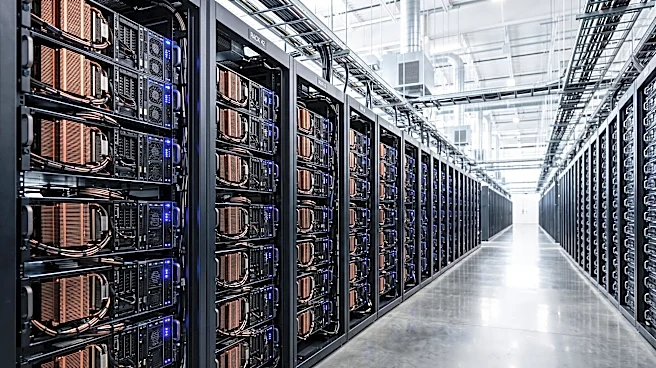
CoreWeave Inc.'s bankers, Morgan Stanley and Mitsubishi UFJ Financial Group Inc., are preparing to sell a $4.5 billion loan as early as next week. This financing is secured by graphics processing units (GPUs) designated for Meta Platforms Inc. The proceeds
from this debt sale will be drawn from an escrow account to fund GPUs for a data center located in Dalton, Georgia. The debt is anticipated to be gradually repaid over the loan's duration. While CoreWeave is considered a junk-rated neocloud company, this specific debt sale is expected to achieve investment-grade ratings due to its contract with Meta. Initial discussions suggest the loan transaction could yield between 7% and 7.5%. Despite this, CoreWeave's 9% bond due in 2031 was recently trading at record lows, yielding 18%, and the cost to protect the company's debt against default for five years increased significantly, indicating a more than 70% chance of default within the next five years.
Why It's Important?
This $4.5 billion loan sale highlights the significant capital demands within the artificial intelligence (AI) infrastructure sector and the innovative financing structures being employed. The fact that a junk-rated company like CoreWeave can secure an investment-grade rating for this specific loan, thanks to its contract with Meta, underscores the perceived stability and value of long-term agreements with major tech companies in the AI space. However, the broader market's concern about the potential payoff from massive AI infrastructure spending is evident in CoreWeave's other debt instruments, which are trading at distressed levels. This situation reflects a dual perspective: strong confidence in specific, contract-backed projects versus general apprehension about the overall financial health and long-term viability of some AI infrastructure providers. The outcome of this loan sale could set a precedent for how future AI infrastructure projects are financed, particularly those involving substantial commitments from large tech firms.
What's Next?
The details and timing of the $4.5 billion loan deal are still being finalized and could change. However, potential investors have already expressed interest in line with the transaction size. The successful execution of this loan sale would provide CoreWeave with crucial funding for its data center in Dalton, Georgia, supporting Meta's GPU needs. Conversely, any difficulties in closing the deal could exacerbate existing investor concerns about CoreWeave's financial stability, especially given the high yield on its existing bonds and the increased cost of default protection. The market will closely watch the final terms and investor reception, as it could influence future financing opportunities for other companies in the burgeoning AI debt financing market, particularly amidst new U.S. curbs on chip access that are impacting similar loans tied to Chinese firms.
Beyond the Headlines
The financing structure of this loan, where a junk-rated company leverages a contract with a tech giant like Meta to achieve investment-grade ratings, points to an evolving landscape in corporate finance. It suggests that the perceived creditworthiness of a project can be significantly de-linked from the overall corporate rating when backed by strong, long-term contractual obligations from highly-rated entities. This could lead to more complex and nuanced credit assessments in the future, where specific project-level risks and revenues are scrutinized more intensely than the parent company's general financial health. Furthermore, the contrasting market sentiment between this Meta-backed loan and CoreWeave's other debt highlights the speculative nature of the AI infrastructure boom. Investors are grappling with how to value companies that are critical to AI development but operate with high capital expenditures and uncertain long-term returns, especially as geopolitical factors like U.S. chip curbs introduce additional layers of risk.