







What's Happening?
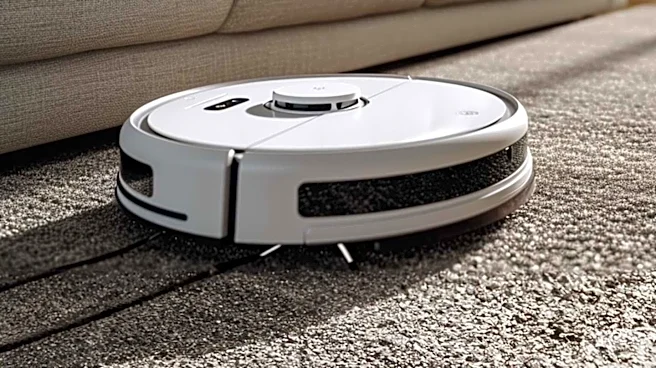
The Matic robot vacuum and mop has garnered a Domino Good Design Award, recognized for its advanced navigation system that utilizes cameras to map and clean homes. Priced at $1,495, the Matic device is noted for its ability to move with precision, anticipating
obstacles rather than bumping into them. Its cameras can identify objects as small as half an inch, including cords, toys, and socks, allowing it to adjust its route proactively. The setup process is described as straightforward, involving Wi-Fi connection, app download, and home mapping. Matic automatically distinguishes between rugs and hard floors, switching between vacuuming and mopping as needed. During mopping, a built-in wringer removes dirty water from the roller. The device also features a bristle-free brush roll designed to prevent hair tangles and a sealed HEPA-12 bag system that filters outgoing air and indicates when maintenance is required. A unique 'Cues' feature allows users to command the robot verbally or by pointing out messes.
Why It's Important?
The Matic robot vacuum's recognition with a Domino Good Design Award underscores a significant advancement in smart home technology, particularly in the U.S. market. Its camera-based navigation system and ability to proactively avoid obstacles represent a leap forward from earlier robot vacuum models that often required human intervention. This innovation enhances user convenience and the overall effectiveness of automated cleaning, potentially setting a new standard for the industry. The high price point of $1,495 positions Matic as a premium product, targeting consumers willing to invest in cutting-edge technology for household efficiency. The emphasis on privacy, with local processing of maps, camera feeds, and cleaning history, addresses growing consumer concerns about data security in smart devices, which could influence purchasing decisions and industry practices.
What's Next?
The success and recognition of Matic could spur further innovation in the robot vacuum market, with competitors potentially developing similar camera-based navigation and obstacle avoidance technologies. The focus on user privacy, with on-device processing of data, might become a more prominent selling point for smart home appliances, influencing product development and marketing strategies across the industry. As more advanced features become available, the market may see a segmentation between premium, high-tech devices like Matic and more budget-friendly options. The 'Cues' feature, allowing verbal commands and pointing, suggests a future where human-robot interaction in domestic settings becomes more intuitive and seamless, potentially leading to broader adoption of voice-controlled smart home ecosystems.
Beyond the Headlines
The Matic robot vacuum's design and functionality reflect a deeper societal aspiration for effortless living and the integration of advanced AI into daily routines. The ability of the robot to 'move more like a person than a robot' speaks to a desire for technology that is not just functional but also intuitive and less disruptive. The privacy features, particularly the local processing of sensitive data, highlight an evolving ethical landscape in the age of smart devices. As homes become increasingly connected, the balance between convenience and data security will remain a critical consideration for both manufacturers and consumers. The award itself signifies a cultural appreciation for thoughtful design that combines aesthetics with practical utility, pushing the boundaries of what is considered 'good design' in the context of domestic technology.