


What's Happening?
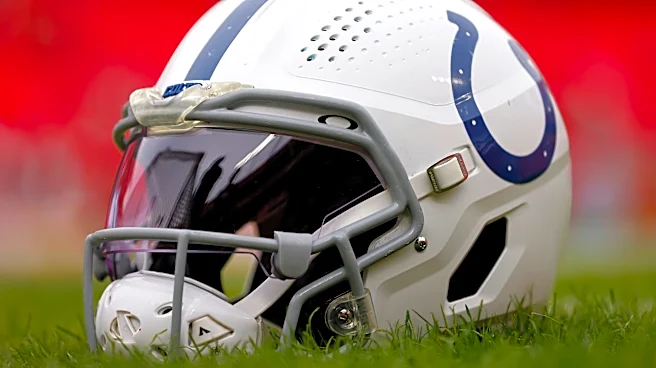
During a live segment of 'The Pat McAfee Show,' host Pat McAfee passionately defended the Indianapolis Colts after former Dallas Cowboys star Marcus Spears playfully questioned the team's lack of Monday Night Football appearances. McAfee, a former Colts punter
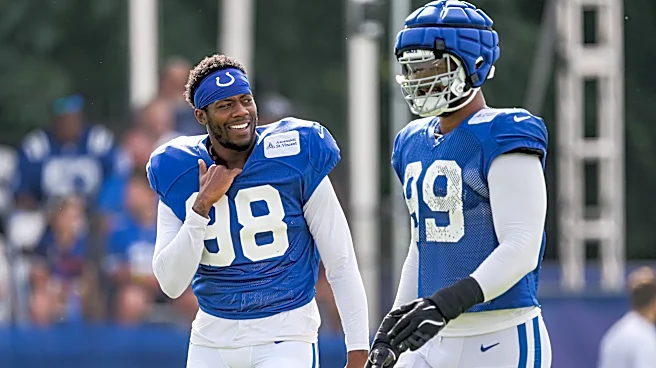
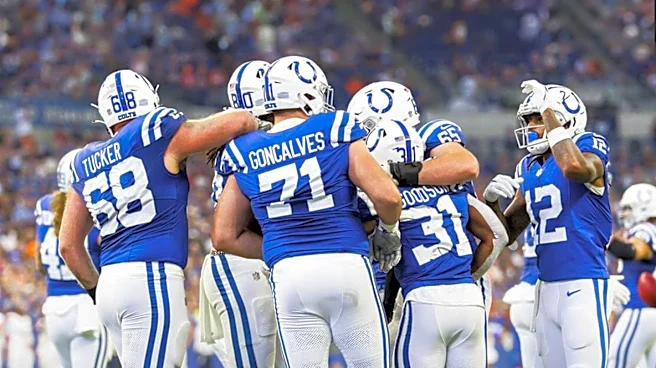
and season ticket holder, expressed frustration over the team's limited primetime games, noting they have only two scheduled this year, none on Monday night. He highlighted a specific instance where the Colts wore 'Indiana Nights' alternate uniforms for a 1 p.m. game due to the absence of a night game on their schedule. McAfee's defense underscored his personal connection and loyalty to the franchise, which he served for eight seasons. The Colts have struggled in primetime games over the past 15 seasons, holding a 17-26 record, and have historically hosted a low percentage of such games, according to a 2021 report by the Indy Star. The team's decline in primetime visibility is partly attributed to the departure of quarterback Peyton Manning after the 2010 season, as the team has since missed five postseasons and reached the AFC Championship only once in 15 years.
Why It's Important?
This situation highlights the significant impact of media visibility on professional sports franchises and their fan bases. For the Indianapolis Colts, the lack of primetime games, particularly on Monday Night Football, can affect national perception, sponsorship opportunities, and fan engagement. Primetime slots offer broader exposure, which is crucial for team branding and attracting new fans beyond the local market. For players, primetime games can increase their national profile and marketability. Pat McAfee's public defense, stemming from his personal investment as a former player and current season ticket holder, resonates with fans who feel their team is being overlooked. This sentiment can influence fan loyalty and attendance, impacting the team's revenue streams. Furthermore, the discussion touches upon the broader issue of how media networks, like ESPN, schedule games and the criteria they use, which can inadvertently shape narratives around team performance and relevance. The historical context of Peyton Manning's departure underscores how a star player's presence can dramatically alter a team's media appeal and national standing.
What's Next?
The ongoing discussion around the Indianapolis Colts' primetime schedule is likely to continue, especially as the NFL season progresses. While the current schedule is set, the public commentary from influential figures like Pat McAfee could potentially influence future scheduling decisions by the NFL and its broadcast partners. Increased fan and media pressure might prompt the league to re-evaluate how it allocates primetime slots, considering factors beyond recent performance, such as historical fan base and market size. For the Colts, improving their on-field performance will be the most direct way to secure more prominent game slots in the future. If the team achieves greater success, it will naturally become a more attractive option for primetime broadcasts. Additionally, McAfee, as a prominent sports media personality, may continue to advocate for the Colts, keeping the issue in the public discourse and potentially galvanizing fan support for increased national recognition.
Beyond the Headlines
The debate over primetime scheduling extends beyond mere game times; it reflects the intricate relationship between sports, media, and cultural identity. For a team like the Colts, being consistently overlooked for national broadcasts can foster a sense of regional isolation, impacting local pride and community engagement. The 'Indiana Nights' uniform incident, where a night-themed jersey was worn during a daytime game, symbolizes a disconnect between marketing efforts and actual media exposure, highlighting the challenges teams face in maintaining a national presence without primetime slots. This situation also subtly underscores the power of individual personalities, like Pat McAfee, in shaping public opinion and influencing sports narratives. His ability to leverage his platform to champion his former team demonstrates the evolving role of ex-athletes in sports media, moving beyond traditional analysis to become vocal advocates for their past affiliations. This dynamic can create a more personalized and emotionally charged sports media landscape, where loyalty and passion play a significant role in public discourse.