


What's Happening?
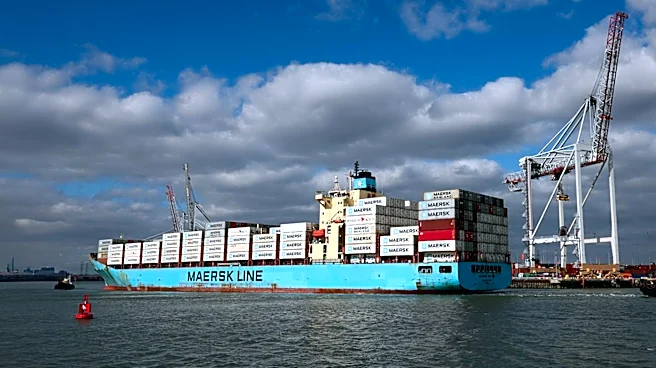
Maersk and Hapag-Lloyd have resumed their Gemini Cooperation route through the Suez Canal, marking a cautious return to the trans-Suez corridor. This decision follows a thorough assessment of the security situation in the Red Sea, where recent attacks
have targeted tankers linked to Saudi Arabia. The route, starting with the Berlin Maersk, will include stops in Egypt and Saudi Arabia. The carriers emphasize the Suez route as a faster and more sustainable option, despite ongoing security threats. The resumption is part of a broader trend of carriers cautiously re-entering the Red Sea and Suez routes.
Why It's Important?
The resumption of the Suez Canal route by major shipping lines like Maersk and Hapag-Lloyd is significant for global trade, as it offers a more efficient and cost-effective transit option. However, the decision also highlights the persistent security challenges in the region, which could impact shipping operations and insurance costs. The move reflects a strategic balance between operational efficiency and risk management. The situation underscores the importance of international cooperation in ensuring maritime security and the safe passage of commercial vessels.
What's Next?
Maersk and Hapag-Lloyd will continue to monitor the security situation and may adjust their routes accordingly. The ongoing security threats in the Red Sea could lead to increased naval patrols and international efforts to secure maritime routes. The carriers' decision may influence other shipping companies to reassess their routes and risk management strategies. The situation could also prompt discussions on enhancing maritime security measures and international collaboration to address regional threats.