






What's Happening?
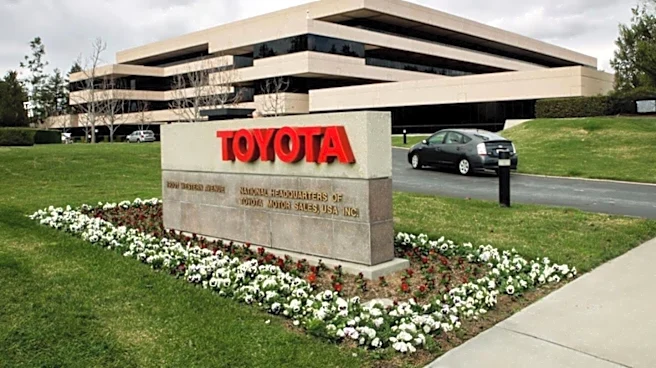
Michigan Governor Gretchen Whitmer attended the opening of Toyota's new battery testing and development facility in Saline, Michigan. The facility, named the Toyota Battery Center of North America (TBC), is located at the automaker’s North American research
and development center and spans 30,000 square feet. Governor Whitmer spoke at the event, emphasizing Michigan's strong manufacturing capabilities and its skilled workforce. She stated, “In Michigan we’re proud. We know how to make things,” and highlighted the state's extensive network of supplier companies, talented engineers, and generations of manufacturing expertise. Governor Whitmer concluded by affirming, “Toyota believes in Michigan, and Michigan believes in Toyota.” The TBC is designed to evaluate and develop technology across the entire battery development cycle, from raw material sourcing to customer applications and recycling, supporting Toyota's future electrified vehicle offerings.
Why It's Important?
The opening of Toyota's new battery facility in Michigan, coupled with Governor Whitmer's presence and remarks, underscores the state's pivotal role in the evolving automotive industry, particularly in electric vehicle (EV) technology. This investment by Toyota signifies a commitment to advanced manufacturing and research within Michigan, reinforcing the state's position as a hub for automotive innovation. The facility's focus on the full battery development cycle is crucial for accelerating the transition to electrified vehicles, which has significant economic and environmental implications. For Michigan, this means job creation, continued development of a high-skilled workforce, and attracting further investment in the EV supply chain. The collaboration between a major international automaker like Toyota and the state government highlights the importance of public-private partnerships in driving technological progress and economic growth in the U.S. automotive sector.
What's Next?
The Toyota Battery Center of North America will serve as a central hub for developing and rigorously testing new battery technologies, ensuring they meet Toyota's stringent standards for quality, efficiency, and durability. The facility will also collaborate closely with Toyota's manufacturing plants across the continent, including its new battery factory in North Carolina, and vehicle assembly plants. This integration aims to streamline the development and production of electrified vehicles. The ongoing work at TBC is expected to contribute significantly to Toyota's future hybrid, plug-in hybrid, and pure-electric vehicle offerings. For Michigan, this investment is likely to foster further growth in its advanced manufacturing sector and strengthen its reputation as a leader in automotive technology, potentially attracting more companies and talent to the region.
Beyond the Headlines
The establishment of the Toyota Battery Center in Michigan reflects a broader strategic shift within the global automotive industry towards electrification and sustainable mobility. This move is not just about developing new products but also about securing a competitive edge in a rapidly changing market. For Michigan, it represents a re-affirmation of its industrial identity, adapting its historical manufacturing prowess to the demands of the 21st century. The emphasis on local talent and supplier networks highlights the importance of regional ecosystems in fostering innovation and economic resilience. Furthermore, the facility's comprehensive approach to the battery lifecycle, from raw materials to recycling, points to a growing awareness of the circular economy and the need for sustainable practices in high-tech manufacturing. This investment could serve as a model for other states looking to transition their industrial bases towards green technologies.