



What's Happening?
Former NBA player Enes Kanter Freedom was ejected from a WNBA game between the Indiana Fever and the Chicago Sky on Sunday night. The incident occurred late in the third quarter when Sky guard Natasha Cloud confronted Freedom, who was sitting courtside.
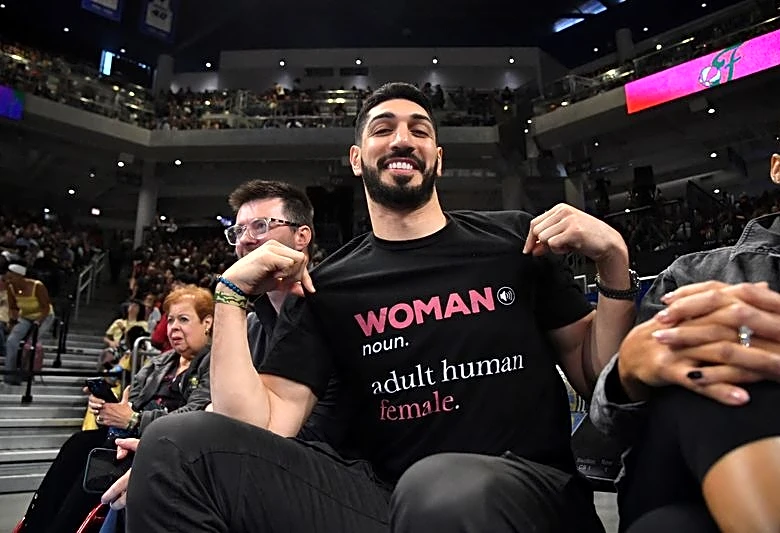
Freedom was wearing a black shirt that read 'WOMAN noun. adult human female.' Following a timeout, Cloud, after scoring, approached Freedom, yelling and pointing in his direction. Freedom responded by holding his arms out and taking a step onto the court. Security and several Sky players intervened to prevent the situation from escalating. Freedom was subsequently escorted from the court area, displaying his shirt as he walked towards the lobby. He then had a conversation with police officers before leaving Wintrust Arena. This event follows Freedom and another former NBA player, Royce White, declaring themselves eligible for the WNBA draft, stating they identify as women.
Why It's Important?
This incident highlights the ongoing and often contentious debate surrounding gender identity and participation in women's sports, particularly within the context of the WNBA. Enes Kanter Freedom's presence and his choice of attire, coupled with his previous declaration of identifying as a woman to enter the WNBA draft, directly challenge the league's existing framework and spark public discussion. Natasha Cloud's confrontation reflects the strong feelings and protective stance many WNBA players and supporters have regarding the integrity and definition of women's sports. The WNBA has previously addressed the 'bad-faith' transgender debate, stating it has no eligibility issues, yet the incident underscores the persistent societal and cultural tensions. This event brings to the forefront questions about who defines 'woman' in sports, the role of activism at sporting events, and the boundaries of acceptable fan behavior, especially when it intersects with sensitive social issues. It also puts pressure on the league to clarify its stance and policies in a way that addresses both athlete concerns and broader public discourse.
What's Next?
The WNBA and its teams may face increased scrutiny and pressure to address the issues raised by this incident. Natasha Cloud met with team and league security after the game, suggesting that internal discussions and potential actions regarding player safety and conduct are underway. The league might need to issue further statements or clarify its policies regarding fan behavior and the expression of social or political views at games, especially those that could be perceived as disruptive or confrontational. The actions of Enes Kanter Freedom and Royce White, declaring themselves eligible for the WNBA draft based on their self-identification as women, could prompt the league to review or more explicitly define its eligibility criteria, particularly concerning gender identity. This incident could also fuel further public debate and activism from various groups, potentially leading to more protests or demonstrations at future WNBA games. The focus will be on how the WNBA navigates these complex social issues while maintaining the integrity of its sport and the well-being of its athletes.
Beyond the Headlines
The confrontation between Enes Kanter Freedom and Natasha Cloud transcends a mere fan-player interaction, delving into the complex intersection of sports, gender identity, and freedom of expression. Freedom's public display of his views, particularly his shirt's message and his declaration of identifying as a woman to enter the WNBA draft, challenges the very definition of 'woman' within competitive sports. This incident forces a deeper examination of the WNBA's collective bargaining agreement, which restricts participation to women but lacks specific language on gender identity or sex assigned at birth. The emotional response from Natasha Cloud and the intervention of security highlight the intense personal and professional stakes involved for athletes who feel their sport's integrity is being undermined. This event is not just about a basketball game; it's a microcosm of a larger societal debate about transgender rights, women's spaces, and the role of public figures in shaping these discussions. It underscores the ethical and legal complexities that sports organizations face in balancing inclusivity with fair competition, and the potential for sporting events to become platforms for broader cultural and political statements.