








What's Happening?
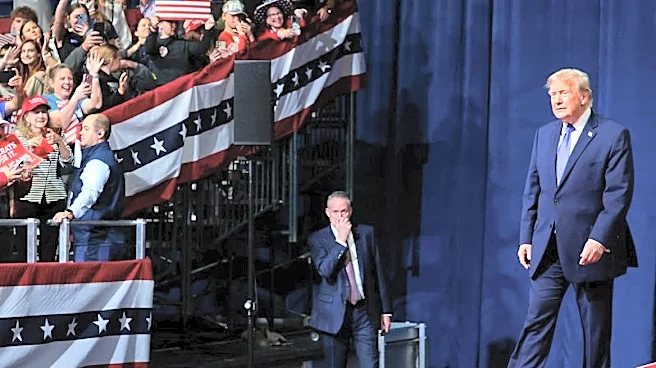
Elaine Chao, who served as U.S. transportation secretary during President Trump’s first administration, has emphasized the significant role South Korea can play in rebuilding the U.S. shipbuilding industry. In an interview with The Dong-A Ilbo on October
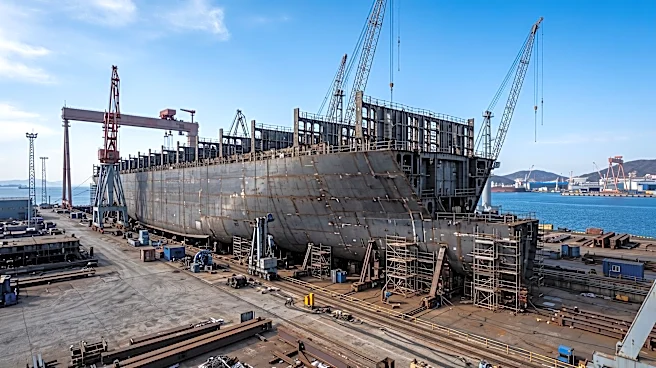
28, Chao highlighted South Korea's world-class shipbuilding technology, advanced manufacturing capabilities, sophisticated supply chains, and skilled workforce as key assets. She stressed that cooperation should extend beyond simply purchasing vessels to actively rebuilding America’s domestic shipbuilding capacity. Chao also underscored the necessity for Washington to provide a predictable policy environment to ensure South Korean investment yields lasting results. She noted that South Korea's planned $150 billion investment in U.S. shipbuilding could accelerate the rebuilding of American production capacity if structured effectively, potentially creating jobs and strengthening supply chains and national security for both nations. Priorities for cooperation include expanded U.S. shipyard capacity, workforce training, and stronger parts supply chains.
Why It's Important?
The potential for South Korean investment to revitalize the U.S. shipbuilding industry carries significant implications for national security, economic growth, and supply chain resilience. Rebuilding domestic shipbuilding capacity is crucial for the U.S. Navy's strategic sealift policy and overall maritime affairs, reducing reliance on foreign shipyards for maintenance and construction. Economically, this investment could generate substantial job creation across various sectors, from manufacturing to engineering, and bolster local economies in shipbuilding regions. Strengthening supply chains through enhanced domestic production reduces vulnerabilities to global disruptions, ensuring critical maritime assets can be built and maintained within the U.S. However, existing U.S. laws like the Jones Act and the Byrnes-Tollefson Amendment, which restrict foreign-built vessels for domestic and military use, pose challenges. While direct contracts for South Korean shipyards to build U.S. Navy vessels might be a long-term prospect, immediate opportunities exist in ship maintenance, repair, and overhaul (MRO), where South Korean companies like Hanwha Ocean have already established a presence.
What's Next?
For South Korean investment to deliver lasting results, the U.S. government must establish a stable and predictable policy environment. Chao's call for policy certainty suggests that consistent tax policies, tariffs, permitting requirements, and investment incentives are crucial for businesses to make long-term commitments. The U.S. government needs to treat South Korean investment as a long-term partnership rather than a series of short-term transactions, ensuring transparent procedures, reasonable transition periods, and honoring existing commitments. Addressing incidents like the arrest and detention of South Korean workers at a Hyundai Motor-LG Energy Solution joint-venture battery plant in Georgia is also vital, as it highlights the need for law enforcement and economic policy to operate in a coordinated manner. Future discussions will likely focus on navigating existing U.S. maritime laws to facilitate deeper cooperation while maximizing the benefits of South Korean technological and manufacturing expertise.
Beyond the Headlines
The broader implications of this potential partnership extend beyond economic and strategic benefits, touching upon the ethical and cultural dimensions of international collaboration. The emphasis on a 'predictable policy environment' highlights a fundamental challenge in attracting foreign investment: the need for consistent governance and regulatory frameworks that transcend political cycles. The incident involving South Korean workers in Georgia underscores the delicate balance between enforcing immigration laws and fostering a welcoming environment for foreign investment and skilled labor. This situation could trigger a re-evaluation of how U.S. domestic policies, particularly those related to labor and immigration, impact international economic partnerships. Ultimately, the success of this initiative will depend not only on the financial commitments but also on the U.S.'s ability to adapt its legal and regulatory landscape to facilitate a truly collaborative and long-term relationship with its allies in critical industrial sectors.