



What's Happening?
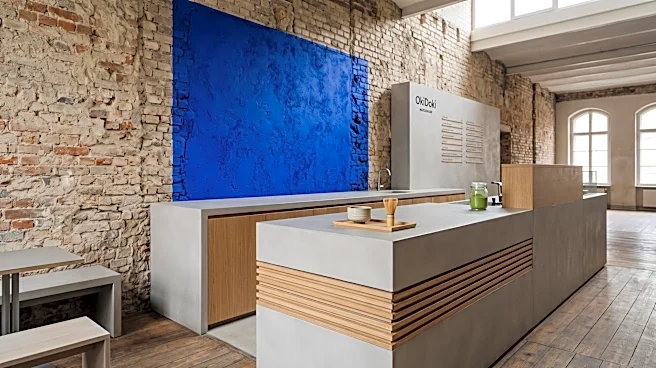
OkiDoki Matcha Bar has opened in Wrocław, Poland, situated within the historic 1904 Feniks building, formerly known as the Barasch Brothers' Department Store. The matcha bar features a minimalist design that integrates the building's exposed architectural
heritage with a bold Yves Klein blue mural. The concept behind OkiDoki is to create a contemporary urban sanctuary that promotes 'togetherness in solitude.' The location previously housed a fabric store, a detail that influenced the project's design by maintaining a historical continuity of self-expression through commerce. The design team aimed to blend the old with the new, offering a unique space for patrons to enjoy matcha in a thoughtfully curated environment. This establishment contributes to the growing trend of specialized beverage bars focusing on unique cultural offerings.
Why It's Important?
The opening of OkiDoki Matcha Bar signifies a broader trend in the food and beverage industry towards specialized, experience-driven establishments. By choosing a historic building and incorporating a minimalist yet striking design, OkiDoki aims to attract customers seeking both quality products and a unique ambiance. This approach can influence other businesses to invest in architectural preservation and innovative interior design, potentially revitalizing historic urban areas. For consumers, it offers a new type of social space that emphasizes tranquility and aesthetic appeal, moving beyond traditional coffee shop models. The focus on matcha also highlights a growing consumer interest in alternative beverages with perceived health benefits and cultural significance, potentially expanding the market for such products in Europe and beyond.
What's Next?
The success of OkiDoki Matcha Bar could inspire similar ventures in other historic European cities, encouraging the adaptive reuse of old buildings for modern commercial purposes. This could lead to increased investment in urban heritage preservation, as businesses recognize the value of unique architectural backdrops. Furthermore, if OkiDoki gains popularity, it may contribute to a wider acceptance and demand for matcha and other specialized tea products in the region, potentially influencing local beverage markets and consumer preferences. Other entrepreneurs might look to OkiDoki's model of combining historical context with contemporary design as a blueprint for future hospitality projects, fostering a new wave of culturally rich and aesthetically pleasing commercial spaces.
Beyond the Headlines
The establishment of OkiDoki Matcha Bar in a historic building reflects a deeper cultural shift towards valuing authenticity and unique experiences in consumer spaces. It highlights how businesses can leverage historical narratives and architectural heritage to create distinctive brand identities that resonate with modern consumers. This trend also touches upon the concept of 'third places' – spaces outside of home and work where people can gather and connect. By designing a minimalist sanctuary, OkiDoki offers a counterpoint to the fast-paced urban environment, promoting mindfulness and a sense of calm. This approach could influence urban planning and commercial development to prioritize spaces that offer both utility and a rich cultural or aesthetic experience, fostering more engaging and meaningful public interactions.