



What's Happening?
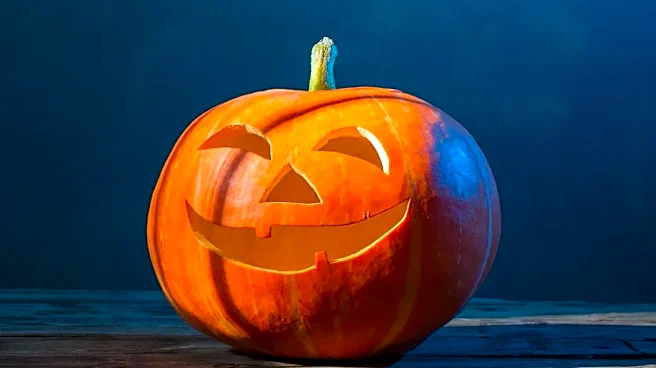
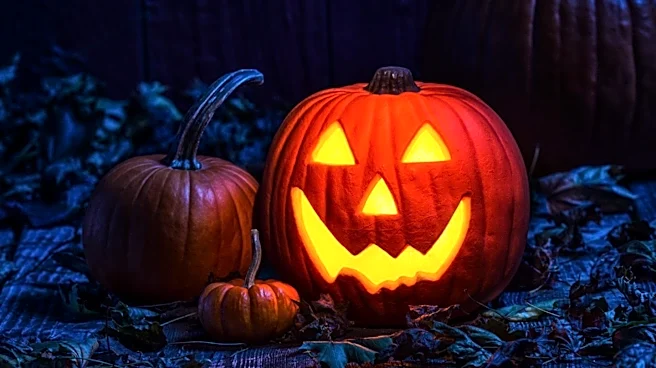
Halloween, once a night of festive play, liturgical meaning, and community interaction, has become increasingly commercialized and focused on gore, according to John Coffey, executive director at Magis Center. Social media users have also noted a decline
in the holiday's traditional feel, with complaints about repetitive decorations and a general sense of dissatisfaction. Justin Lee's essay, 'The Death of Halloween,' is cited as a comprehensive explanation of this shift. The article suggests that an 'eternal adolescence' among Gen X and millennials, coupled with declining birthrates, has contributed to adults attempting to recreate their childhood Halloweens rather than fostering new memories for the next generation. This has led to practices like families driving to 'better neighborhoods' for trick-or-treating, diminishing local community engagement.
Why It's Important?
The shift in Halloween's celebration reflects broader societal changes in the U.S., including increased consumerism and a potential decline in community cohesion. The focus on individual adult nostalgia over creating experiences for children could impact the transmission of cultural traditions and community bonds. The article highlights a move away from local, civic festivity, which could weaken neighborhood interactions and a sense of shared experience. Furthermore, the emphasis on gore over tasteful spookiness may alienate families and children, potentially limiting participation and altering the holiday's character. This trend could also signify a broader cultural struggle to maintain traditional meanings in the face of commercial pressures and changing demographics.
What's Next?
The article proposes several ways to 'recover' Halloween, suggesting a return to its core values. These include prioritizing children's experiences, encouraging families to stay in their own neighborhoods for trick-or-treating to foster local community, and actively engaging with trick-or-treaters rather than leaving candy bowls unattended. It also advocates for moving away from excessive gore in decorations and embracing a more 'tasteful macabre' that acknowledges the holiday's historical roots. Understanding the history of All Hallows' Eve and its connection to All Saints' Day is also suggested as a way to revive its original meaning. These proposed actions aim to re-center Halloween on community, tradition, and a more meaningful celebration.
Beyond the Headlines
The discussion around Halloween's evolution touches upon deeper cultural and ethical implications. The commercialization of holidays often leads to a dilution of their original significance, replacing communal values with consumer-driven activities. The article implicitly raises questions about the role of tradition in a rapidly changing society and how cultural practices adapt or erode over time. The call to 'Keep the Hallow in Halloween' suggests a desire to reclaim spiritual or historical depth from purely secular or commercial interpretations. This reflects a broader societal tension between preserving cultural heritage and adapting to modern trends, highlighting the ongoing debate about the balance between individual entertainment and collective cultural meaning.