




What's Happening?
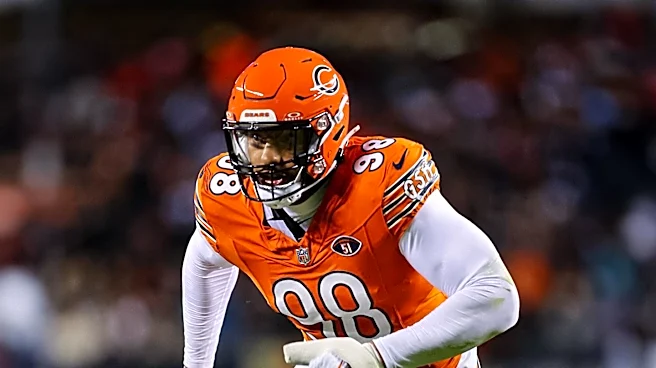
The Chicago Bears have signed running back D'Andre Swift to a three-year, $33.75 million contract extension, including $27.5 million guaranteed. This new deal keeps Swift with the Bears through the 2029 season, a significant commitment given that he was
entering the final year of his previous contract. The extension marks a substantial pay raise for Swift, whose average annual salary now exceeds $11.2 million, placing him among the higher-paid running backs in the NFL. The timing of the agreement, just before the start of the 2026 NFL season, was unexpected by some, as there had been speculation about his long-term future with the team. Bears head coach Ben Johnson and general manager Ryan Poles both publicly endorsed the decision, highlighting Swift's importance to the team's on-field performance and locker room culture. Swift is coming off a career-best season in 2025, where he rushed for 1,087 yards and nine touchdowns, averaging 4.9 yards per carry, playing a crucial role in an offense that ranked third in the NFL in rushing yards.
Why It's Important?
This extension signals the Chicago Bears' commitment to their run-heavy offensive philosophy under head coach Ben Johnson, who previously coached Swift with the Detroit Lions. By securing Swift long-term, the Bears are investing in a proven playmaker who has demonstrated significant production within Johnson's system. This move could solidify the team's offensive identity for the foreseeable future, providing stability at a key position. For Swift, the deal represents a major financial win and a vote of confidence from the organization, allowing him to focus on his performance without the pressure of an expiring contract. However, the decision has drawn some criticism regarding the financial commitment to a running back, a position often viewed as volatile due to injury risk and shorter career spans. The guaranteed money in Swift's contract is notably higher than some other prominent running backs, raising questions about value and resource allocation, especially given the team's other potential needs on defense.
What's Next?
With D'Andre Swift locked in, the Bears will aim to build on their successful 2025 season, where they made a playoff appearance. The focus will now shift to how Swift performs under his new contract and whether he can maintain or exceed his career-best production. The team's offensive strategy will likely continue to heavily feature the run game, with Swift as the centerpiece, supported by other talented backs like Kyle Monangai and Roschon Johnson. The extension also impacts the Bears' salary cap management in future seasons, potentially influencing their ability to sign other key players or address roster weaknesses. Observers will be watching to see if this investment in the running back position yields sustained success for the Bears, particularly as they aim to compete for an NFC North title and advance further in the playoffs. The team's performance in the upcoming season will be a crucial test of this strategic decision.
Beyond the Headlines
The D'Andre Swift extension highlights a broader debate in the NFL regarding the value and longevity of running backs in a league increasingly focused on passing. While many teams are hesitant to offer large, long-term deals to running backs, the Bears' decision indicates a belief in Swift's unique fit within their offensive scheme and his overall value to the team's culture. This move could influence how other teams evaluate and compensate their own running backs, especially those who are integral to a specific offensive system. The guaranteed money in Swift's contract, in particular, sets a benchmark that could be referenced in future negotiations across the league. Furthermore, the continuity between Swift and Coach Johnson, stemming from their time in Detroit, underscores the importance of player-coach relationships and familiarity in maximizing player performance and justifying significant financial investments. This deal reflects a strategic choice by the Bears to prioritize a foundational piece of their offense, potentially signaling a shift in how some franchises view the running back position's long-term worth.