






What's Happening?
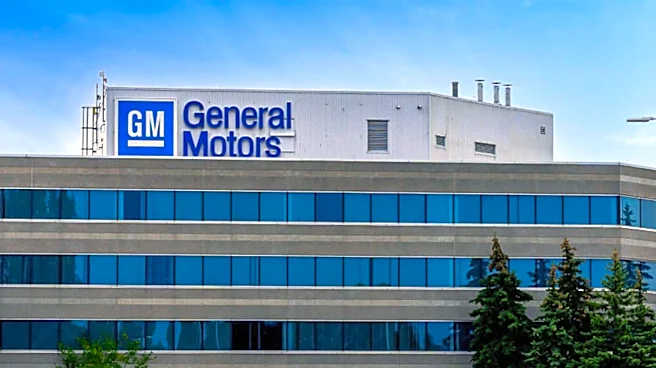
General Motors (GM) Chief Financial Officer Paul Jacobson announced that the automaker is on track to achieve the higher end of its full-year guidance for 2026. This positive outlook is attributed to sustained consumer demand, effective inventory management,
and a diverse vehicle portfolio. Jacobson noted that GM has retired over 37% of its outstanding shares since 2013 and remains committed to share repurchases, provided a double-digit free-cash-flow yield and a low valuation multiple are maintained. The company has set annual capital spending between $10 billion and $12 billion, prioritizing business investment, a strong balance sheet, and shareholder returns. GM's pension plan is nearly fully funded, and its credit metrics are viewed positively by rating agencies, with healthy debt levels. Jacobson highlighted a significant improvement in free cash flow over the past decade, averaging approximately $3 billion in the first five years and exceeding $10 billion in the last five years. GM is also focusing on structural cost reductions, including leveraging artificial intelligence, to avoid relying solely on price increases to counter inflation, while ensuring vehicle quality is not compromised. The company aims to return to historical quality levels and become a world-class quality leader, utilizing technology in manufacturing, supply-chain processes, and vehicle data to identify issues earlier.
Why It's Important?
GM's optimistic 2026 outlook and projected stronger cash flow in 2027 signal a robust financial position and strategic direction for one of the largest U.S. automotive manufacturers. The commitment to structural cost reductions, rather than just price increases, indicates a sustainable approach to managing inflationary pressures, which could set a precedent for other industries facing similar economic challenges. The emphasis on returning to historical quality levels and becoming a 'world-class quality leader' directly addresses consumer confidence and brand loyalty, potentially impacting market share in a highly competitive sector. Furthermore, the integration of artificial intelligence across finance, product development, manufacturing quality, and supplier collaboration demonstrates a forward-thinking approach to operational efficiency and innovation. This technological adoption could lead to accelerated decision-making, improved productivity, and shorter product-development cycles, offering a competitive edge. The focus on digital services, including the expansion of OnStar and Super Cruise subscriptions, represents a significant shift towards recurring revenue streams with 'software-like' margins, diversifying GM's business model beyond traditional vehicle sales and potentially influencing the broader automotive industry's revenue strategies.
What's Next?
GM is currently in the planning process for 2027, anticipating several operational improvements to boost earnings and cash flow. The company expects substantially stronger cash flow in 2027 due to a decline in electric vehicle (EV) restructuring payments and benefits from improved EV profitability, reduced warranty costs, new truck launches, and growth in digital revenue. The launch of new full-size pickups is expected towards the end of 2026, with a richer mix of trucks providing pricing and mix benefits in 2027, though volume is projected to remain relatively flat until production ramps up later in the year. 2028 is characterized as a potential year for greater truck-volume upside. GM will continue to expand disclosures about its digital operations, although they will not be reported as a separate segment due to their close ties to vehicle sales. The company also established a $4.5 billion purchasing facility with relationship banks to enhance supply-chain resilience, particularly in areas like chips, to maintain consistent free cash flow without building large inventory. Ongoing efforts to reduce warranty spending and improve quality are expected to continue, with monthly cash warranty spending already showing a flattening and downward trend.
Beyond the Headlines
GM's strategic pivot towards leveraging artificial intelligence and expanding digital services like OnStar and Super Cruise subscriptions signifies a deeper transformation within the automotive industry. This move transcends mere product sales, aiming to cultivate long-term customer relationships and generate high-margin recurring revenue, akin to a tech company. The focus on AI in manufacturing and supply chain processes not only enhances efficiency but also raises questions about the future of labor in these sectors, potentially leading to shifts in workforce demands and skill sets. The ambition to achieve 'Zero Crashes, Zero Emissions, and Zero Congestion' reflects a profound ethical and societal commitment, pushing the boundaries of automotive engineering and urban planning. This vision implies a future where vehicles are not just modes of transport but integrated components of a smarter, safer, and more sustainable ecosystem. The emphasis on quality improvement, aiming to match or exceed competitors like Toyota, underscores a cultural shift towards engineering excellence and customer satisfaction, which could redefine industry benchmarks and consumer expectations for vehicle reliability and performance. This holistic approach suggests a future where GM is not just an automaker but a comprehensive mobility solutions provider, influencing urban development, environmental policy, and technological innovation.