


What's Happening?
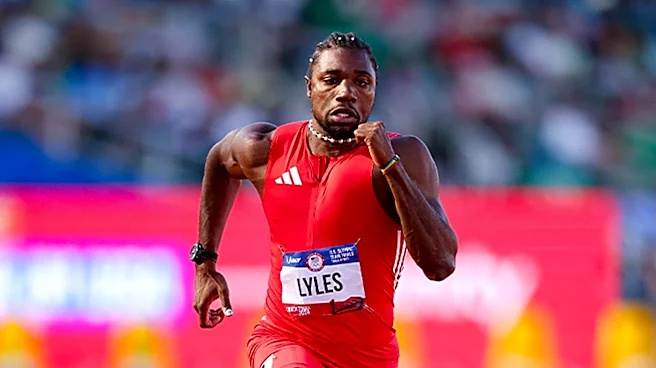
U.S. sprinter Noah Lyles has concluded his season prematurely due to persistent issues stemming from a strain he sustained in late July at the U.S. Championships. Lyles, the 100-meter Olympic champion, stated that the initial strain led to the resurgence
of other physical problems, making it difficult for him to continue training effectively. This announcement means Lyles will not compete in any further events this season, impacting his competitive schedule and preparations. The injury has been a significant setback for the athlete, who had been a prominent figure in recent track and field events.
Why It's Important?
Noah Lyles' early season exit is significant for the U.S. track and field community and his global fan base. As a reigning Olympic champion and one of the sport's most recognizable figures, his absence from major competitions impacts the competitive landscape and viewership. For Lyles, this early end to the season means a crucial period of recovery and rehabilitation, potentially affecting his readiness and performance in upcoming major championships. It also highlights the physical demands and inherent risks faced by elite athletes, where even minor injuries can have cascading effects on their careers and competitive cycles. His recovery will be closely watched as he aims to return to peak form.
What's Next?
Noah Lyles will now focus on rehabilitation and recovery from his lingering injury issues. This period will likely involve extensive physical therapy and a carefully managed training regimen to ensure a full return to health. His team will be strategizing his comeback, aiming for a strong return in the next competitive season. The focus will be on preventing future recurrences of the injury and building a robust physical foundation. Fans and competitors will anticipate his return to the track, eager to see him compete at the highest level once again.
Beyond the Headlines
Lyles' situation underscores the broader challenges faced by professional athletes in managing their physical health and career longevity. The pressure to perform at an elite level often pushes athletes to their physical limits, making them susceptible to injuries. His decision to end the season early, rather than risk further damage, reflects a strategic approach to long-term career management. This also brings into focus the role of sports medicine and rehabilitation science in supporting athletes' careers, emphasizing the importance of comprehensive care beyond just immediate treatment. The mental toll of such setbacks on athletes, who often define themselves by their performance, is also a less visible but critical aspect of their recovery journey.