


What's Happening?
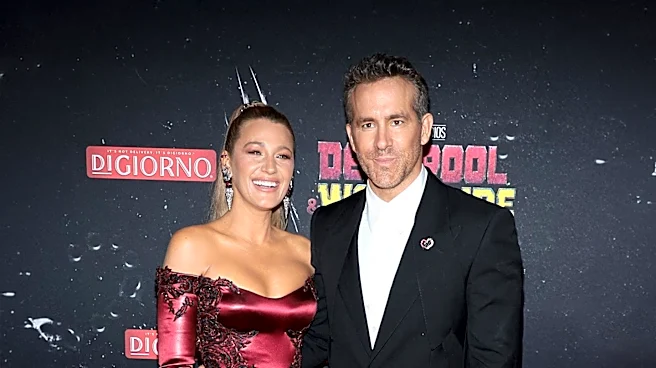
Blake Lively and Ryan Reynolds, a prominent Hollywood couple, met and began their relationship while co-starring in the 2011 superhero film 'Green Lantern'. Despite the movie's critical and commercial failure, their on-set connection led to them dating
after its release. The couple married the following year at Boone Hall Plantation in Mount Pleasant, South Carolina. In 2020, Reynolds publicly apologized for choosing the plantation as their wedding venue, acknowledging the historical context and expressing deep regret. They have since had four children together. Their story is highlighted among several other celebrity couples who found love and married after meeting on film or television sets, including Tom Hardy and Charlotte Riley, and Penelope Cruz and Javier Bardem.
Why It's Important?
The story of Blake Lively and Ryan Reynolds' relationship, particularly their wedding venue controversy, underscores the increasing scrutiny public figures face regarding their choices and their historical implications. Reynolds' public apology for marrying at a plantation reflects a broader societal shift towards greater awareness and accountability concerning historical injustices, especially those related to slavery in the United States. This event highlights how celebrity actions, even personal ones, can become subjects of public discourse and influence cultural conversations around historical memory and social responsibility. It also demonstrates the evolving expectations placed on public figures to acknowledge and address the impact of their decisions on marginalized communities, potentially influencing other celebrities and the public to consider the ethical dimensions of their choices.
What's Next?
While the immediate aftermath of the wedding venue apology has passed, the long-term impact on Blake Lively and Ryan Reynolds' public image and their continued engagement with social issues remains relevant. The couple may continue to use their platform to advocate for social justice causes, building on Reynolds' previous apology. Their actions could set a precedent for how other celebrities address past controversies, potentially leading to more public apologies or commitments to social causes from other high-profile individuals. Furthermore, the ongoing public discourse around historical sites and their use for celebratory events suggests that similar situations may arise, prompting further discussions about cultural sensitivity and historical reconciliation in the entertainment industry and beyond.
Beyond the Headlines
The controversy surrounding Blake Lively and Ryan Reynolds' plantation wedding venue delves into deeper ethical and cultural dimensions concerning the commodification of historical sites associated with slavery. It raises questions about how society remembers and commemorates painful historical periods, and whether venues with such histories should be used for celebrations. The public's reaction and Reynolds' subsequent apology highlight a growing demand for historical consciousness and ethical consumption, even in personal life choices. This incident contributes to a broader cultural reckoning in the U.S. regarding systemic racism and the legacy of slavery, pushing for a more critical examination of traditions and practices that might inadvertently perpetuate historical insensitivity. It also reflects the power of public opinion and social media in holding public figures accountable for their choices.