







What's Happening?
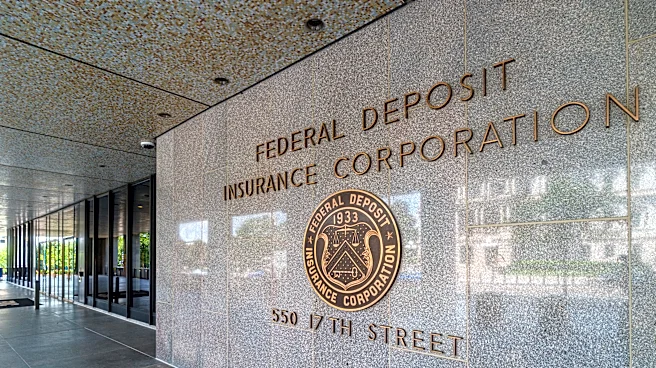
The Federal Deposit Insurance Corporation (FDIC) has introduced a proposal to streamline its bank merger review processes by creating a rapid review track for 'de minimis' merger transactions. This new track would apply to acquisitions of small banks,
defined as those with assets below $133.9 million (the 2026 Hart-Scott-Rodino threshold) and less than 5% of the buyer's total assets. Under this proposal, these mergers could be approved through a letter filing, potentially within as little as five days, without a public comment period. The FDIC-supervised banks eligible for this rapid review track are often located in small, predominantly rural counties where a single branch can represent a significant portion of the local banking market. There are approximately 530 such banks, operating 901 full-service branches across 558 counties. The absence of a public comment period is a key point of contention, as it would limit the ability of affected communities to voice concerns before a deal is finalized.
Why It's Important?
This proposed rapid review track by the FDIC carries significant implications for rural communities across the U.S. The lack of a public comment period for 'de minimis' mergers means that residents and local stakeholders in these areas would lose their opportunity to provide input on bank acquisitions that could profoundly impact their access to financial services. Many of the small banks targeted for these mergers are the sole banking presence in their communities. If these branches close post-acquisition, 112 counties in 22 states could see at least 30% of their bank branches disappear, with 58 counties potentially losing half or more, and 11 counties becoming complete banking deserts. The majority of these vulnerable counties are rural. This could exacerbate financial exclusion, making it harder for individuals and small businesses in these areas to access essential banking services, obtain loans, and conduct daily financial transactions, potentially hindering local economic development and stability.
What's Next?
The FDIC's proposal is currently under consideration, and its implementation would significantly alter the landscape of small bank mergers. The primary next step involves the FDIC's decision on whether to proceed with the rapid review track as proposed, particularly regarding the controversial absence of a public comment period. If approved, the streamlined process would allow for quicker consolidation in the banking sector, especially among smaller institutions. Stakeholders, including community advocacy groups and rural residents, are likely to continue to express their concerns about the potential for reduced banking access and lack of transparency. The FDIC will need to weigh these concerns against its objectives for efficiency in merger reviews. The long-term consequences will depend on the rate of branch closures following such mergers and the subsequent impact on the financial health and accessibility of services in affected rural areas.
Beyond the Headlines
The FDIC's proposal highlights a broader tension between regulatory efficiency and community engagement in financial policy. While a rapid review track could expedite mergers and potentially reduce administrative burdens for banks, it risks overlooking the unique needs and vulnerabilities of rural communities. The concept of 'de minimis' in a financial context may not fully capture the social and economic impact of a bank branch closure in an underserved area, where a single institution can be a cornerstone of local commerce and social infrastructure. This situation raises ethical questions about equitable access to essential services and the role of regulatory bodies in protecting community interests during corporate consolidations. The potential for increased banking deserts could also accelerate digital divides, as communities without physical bank branches may be forced to rely more heavily on online banking, which might not be accessible to all residents due to internet connectivity issues or digital literacy gaps.