




What's Happening?
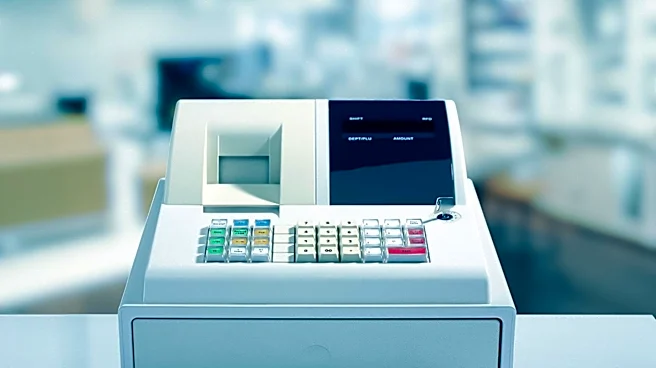
Pharmacies are increasingly adopting integrated payment systems that link card terminals directly to Electronic Point of Sale (EPOS) systems. This integration minimizes errors by eliminating the need to manually enter transaction amounts on separate devices,
thereby streamlining the payment process. The system allows for a more accurate reconciliation of card totals, cash totals, and sales records, which is particularly beneficial for multi-site pharmacies. This setup not only improves operational efficiency but also provides a clearer view of payment mixes and takings across different locations. The integration is designed to support the fast-paced environment of pharmacies, where staff frequently switch between various tasks such as over-the-counter sales and prescription collections.
Why It's Important?
The adoption of integrated payment systems in pharmacies is crucial for enhancing operational efficiency and reducing administrative burdens. By ensuring that payment processes are seamless and error-free, pharmacies can focus more on customer service and less on transaction management. This is particularly important in a healthcare setting where time and accuracy are critical. The system also offers competitive pricing and reliable performance, which can help pharmacies maintain their profit margins in a highly competitive market. Additionally, the ability to generate consistent and accurate financial reports across multiple sites can aid in strategic decision-making and performance evaluation.
What's Next?
As pharmacies continue to adopt integrated payment systems, there may be further developments in technology that enhance these systems' capabilities. Future advancements could include more sophisticated data analytics tools that provide deeper insights into customer behavior and sales trends. Pharmacies might also explore additional integrations with other healthcare technologies to create a more comprehensive service offering. Stakeholders, including pharmacy owners and technology providers, will likely continue to collaborate to refine these systems to meet evolving industry needs.
Beyond the Headlines
The integration of payment systems in pharmacies also raises considerations around data security and privacy. Ensuring that sensitive payment information is handled securely is paramount, especially in a healthcare setting where patient trust is crucial. Pharmacies must comply with industry standards such as PCI DSS to protect against fraud and data breaches. Additionally, the shift towards integrated systems may require staff training to ensure that employees are proficient in using new technologies and can troubleshoot issues effectively.