

What's Happening?
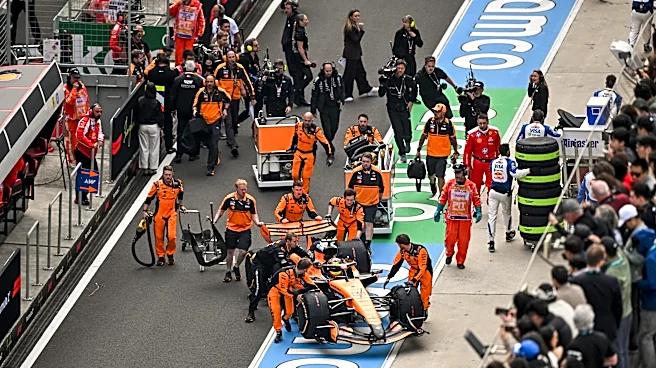
McLaren is set to introduce a new round of Formula 1 upgrades for the 2026 São Paulo and Las Vegas Grands Prix. Team principal Andrea Stella confirmed these developments, aiming to restore the team's competitiveness and ability to challenge for podium
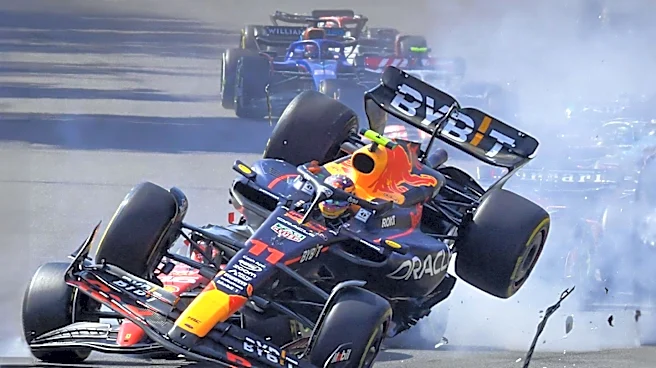
finishes. This move comes after a challenging 2026 campaign where McLaren has fallen behind competitors like Mercedes, Ferrari, and Red Bull in the Constructors' Championship. The team's recent performance in Mexico saw Lando Norris finish fifth, while Oscar Piastri lost his points finish due to a 10-second penalty for a collision with Arvid Lindblad, dropping him to 15th. Stella expressed hope that the new components would improve the MCL40’s competitiveness to consistently challenge leading teams, focusing on both qualifying and race pace. The precise aerodynamic or mechanical components for Interlagos have not yet been publicly detailed.
Why It's Important?
The introduction of these upgrades is crucial for McLaren's standing in the highly competitive Formula 1 season. A return to podium contention would significantly impact the team's morale, financial incentives from championship standings, and its appeal to sponsors and future talent. For the U.S. market, particularly with the Las Vegas Grand Prix being one of the rounds for these upgrades, a stronger McLaren performance could boost fan engagement and viewership, especially if the team can challenge for wins. The performance of drivers like Oscar Piastri, who has faced recent setbacks, is also under scrutiny, as consistent strong results are vital for a driver's career trajectory and team stability. The success or failure of these upgrades will influence McLaren's strategic direction for the upcoming 2027 season, where new technical regulations will further reshape the competitive landscape.
What's Next?
McLaren will deploy the new upgrades across the São Paulo and Las Vegas Grands Prix. The São Paulo Grand Prix at Interlagos, with its diverse track characteristics, will serve as an immediate test for the effectiveness of these developments. The team will need to assess how the upgrades impact performance across different corner types and straight-line efficiency. Weather conditions, with potential rain forecast for Saturday's qualifying session in São Paulo, could further complicate the assessment. Following these races, McLaren will evaluate the data and determine their strategy for the remaining rounds of the 2026 season and the subsequent 2027 season, which will operate under new technical regulations. The performance in these upcoming races will be critical in shaping the team's development priorities and competitive outlook.
Beyond the Headlines
The ongoing struggle for McLaren highlights the intense technological arms race within Formula 1. Teams constantly invest heavily in research and development, with every minor upgrade potentially yielding significant competitive advantages. This continuous innovation drives advancements not only in motorsport but also has spillover effects into other industries, particularly in automotive engineering and aerodynamics. The pressure on teams to perform, as evidenced by McLaren's efforts to regain podium potential, underscores the high stakes involved, where millions of dollars in prize money and sponsorship deals are on the line. The incident involving Oscar Piastri and Arvid Lindblad also brings to light the fine margins and subjective nature of stewarding decisions in racing, which can dramatically alter race outcomes and championship standings, adding another layer of complexity to the sport.