






What's Happening?
New research from the Federal Reserve Bank of San Francisco indicates that a potential La Niña event in 2027, following the current El Niño, could lead to a 1 percentage point increase in U.S. inflation. The current El Niño, characterized by unusually
warm Pacific Ocean temperatures, is estimated to have already raised the Personal Consumption Expenditures (PCE) price index by approximately 0.3 percentage points between April and July of this year. While this initial inflationary effect is expected to subside by the end of the current year, the subsequent La Niña, which involves cooler-than-normal sea surface temperatures in the equatorial Pacific, could exert significant upward pressure on prices. Both El Niño and La Niña phenomena are known to influence global climate patterns and agricultural production, potentially causing droughts, floods, and extreme weather events. The World Meteorological Organization has warned that the current El Niño could be one of the most powerful on record.
Why It's Important?
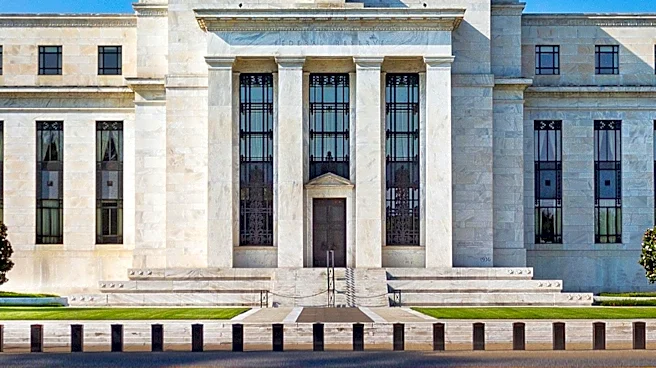
This projection highlights a significant and complex challenge for the Federal Reserve, which has been struggling to keep U.S. inflation within its 2 percent target for over five and a half years. The potential for weather phenomena like La Niña to drive up inflation adds another layer of uncertainty to an already volatile economic landscape, marked by supply chain disruptions, tariff increases, and rising international oil prices. Extreme weather events, if they disrupt agricultural production and logistics, could further escalate food and energy costs, directly impacting consumers and businesses. The research also suggests a divergence where El Niño could positively affect U.S. job growth even as it fuels inflation. This creates a difficult trade-off for the Fed between its dual mandates of price stability and maximum employment, especially if the inflationary impact of these climate patterns intensifies.
What's Next?
The Federal Reserve will likely continue to monitor climate patterns and their potential economic impacts closely. While the Fed recently held its benchmark interest rate steady, markets are anticipating possible additional rate increases in December and next year to curb inflation. The findings from the San Francisco Fed suggest that policymakers will need to factor in the unpredictable nature of climate-driven economic shocks when formulating future monetary policy. Businesses and consumers should prepare for potential fluctuations in food and energy prices, as well as possible disruptions to supply chains, depending on the severity and duration of the anticipated La Niña event. Further research is needed to refine these predictions and understand the full scope of climate-economy interactions.
Beyond the Headlines
The increasing influence of climate phenomena like El Niño and La Niña on economic indicators underscores the growing intersection of environmental science and economic policy. This development highlights the need for more sophisticated models that integrate climate data into economic forecasts, moving beyond traditional economic variables. The potential for climate events to create 'stagflationary' pressures—simultaneously increasing inflation and potentially slowing economic growth in certain sectors—could necessitate novel policy responses. Furthermore, the vulnerability of global supply chains to extreme weather events suggests a broader need for resilience planning in agriculture, logistics, and energy sectors. This situation also brings to light the ethical considerations of climate change, as its impacts disproportionately affect vulnerable populations through rising costs and resource scarcity, potentially exacerbating social inequalities.