



What's Happening?
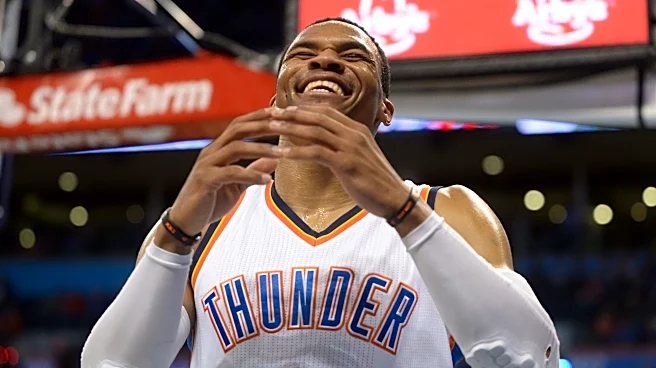
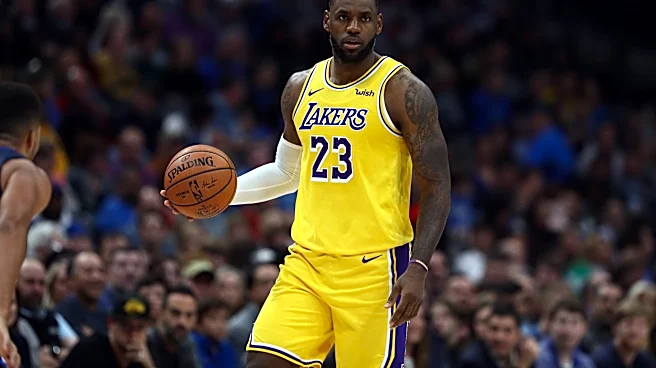
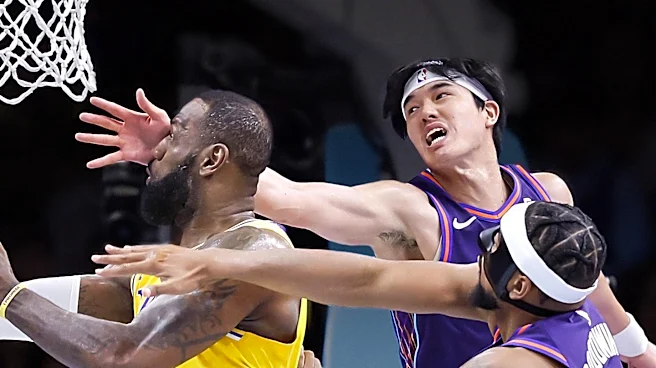
Former NBA Champion Jeff Teague, speaking on the Club 520 podcast, suggested that Russell Westbrook's reputation was negatively impacted by his tenure with the Los Angeles Lakers, particularly due to playing alongside LeBron James. Teague explained that when
a superstar like Westbrook joins a team where another player, such as James, is already established as 'the guy,' the newcomer often bears the brunt of criticism if the team struggles. The Lakers had traded away key players like Kyle Kuzma, Kentavious Caldwell-Pope, and Montrezl Harrell, along with a 2021 first-round pick, to acquire Westbrook. Despite Westbrook's historical achievements, including four triple-double seasons, his performance with the Lakers was heavily scrutinized, with many overlooking the team's structural issues, such as an aging roster and poor spacing due to too many rim-oriented players.
Why It's Important?
This analysis by Jeff Teague highlights the significant impact of team dynamics and media narratives on a player's reputation, especially in high-profile markets like Los Angeles. It underscores how even highly accomplished athletes can face disproportionate criticism when joining a team led by another dominant superstar. The Lakers' decision to dismantle their championship-winning core for Westbrook, coupled with the team's subsequent struggles, created a challenging environment. The narrative that Westbrook was not 'on LeBron's level' overshadowed underlying team construction issues, such as an older roster and a lack of offensive spacing. This situation illustrates how external pressures and media portrayals can shape public perception, potentially affecting a player's market value, future contracts, and overall legacy, regardless of their individual talent or past achievements.
What's Next?
The discussion surrounding Russell Westbrook's time with the Lakers will likely continue to be a point of reference in analyses of player trades and team building in the NBA. For Westbrook, moving forward, his performance with subsequent teams will be crucial in reshaping his narrative and demonstrating his continued value as a player. For teams considering acquiring established stars, this situation serves as a cautionary tale about the importance of roster fit and managing expectations, especially when pairing multiple high-usage players. The Lakers, having moved on from Westbrook, will continue to refine their roster construction to avoid similar issues, focusing on creating a balanced team that complements their star players. The broader NBA community will likely continue to debate the role of individual blame versus systemic issues in team performance.
Beyond the Headlines
The case of Russell Westbrook and the Lakers delves into the complex interplay between individual talent, team chemistry, and the powerful influence of media narratives in professional sports. It raises questions about the fairness of public scrutiny and the tendency to assign blame to a single player rather than acknowledging broader systemic or strategic failures. The 'LeBron effect,' where players joining his team often face intense pressure to perform at an elite level, is a recurring theme in NBA discourse. This situation also highlights the psychological toll on athletes who become the focal point of criticism, as evidenced by the 'Westbrick' nickname. It underscores the need for a more nuanced understanding of team performance, moving beyond simplistic narratives to consider the intricate factors that contribute to success or failure in a highly competitive environment.