





What's Happening?
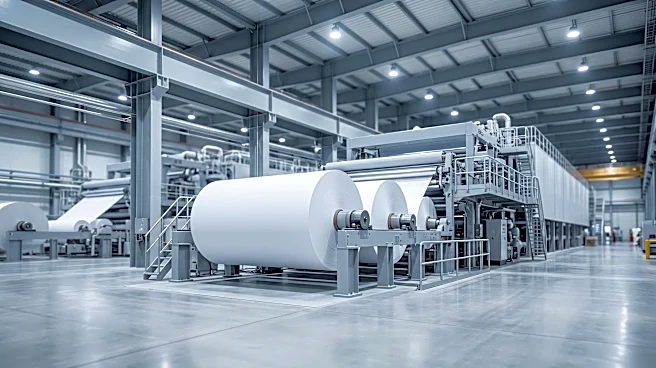
Rayonier Advanced Materials (RYAM) has suspended operations at its Témiscaming, Quebec, paperboard mill. This decision impacts more than 400 employees, with approximately 300 represented by the Unifor union. According to CEO Daniel Krawczyk, about 75%
of the mill's paperboard production is shipped to the U.S., making it highly vulnerable to tariffs. The company had initially announced its intention to suspend operations in September, but this was postponed until October. This move is part of a broader trend where U.S.-Canada trade tensions and tariffs are significantly affecting the packaging industry, leading to concrete business impacts for companies heavily involved in cross-border trade of wood and paper products and raw materials. Other companies, such as Supremex and O-I, have also announced workforce reductions and plant closures in Canada due to similar tariff-related pressures.
Why It's Important?
The idling of Rayonier Advanced Materials' Quebec mill underscores the significant economic repercussions of U.S.-Canada trade tariffs on the North American packaging and paper industry. For the U.S., this could lead to shifts in supply chains for paperboard, potentially increasing reliance on domestic production or alternative international sources, which might affect pricing and availability for American businesses. The reduction in Canadian supply could also impact U.S. manufacturers that depend on these materials for their packaging needs. Furthermore, the job losses in Quebec highlight the cross-border nature of the industry and how trade policies can have direct human and economic costs beyond national borders. This situation also signals potential instability in the North American fiber supply chain, prompting U.S. companies to re-evaluate their sourcing strategies and consider the long-term implications of trade disputes on their operational resilience.
What's Next?
The immediate next steps for Rayonier Advanced Materials will likely involve managing the impact on its workforce and potentially exploring options for the Témiscaming mill's future, depending on the evolution of U.S.-Canada trade relations and tariff policies. Other Canadian companies in the packaging sector, such as Supremex and O-I, are also implementing measures like workforce reductions and plant line closures in response to tariffs, suggesting a continued period of adjustment and consolidation within the industry. Stakeholders, including U.S. businesses reliant on Canadian paperboard, will need to monitor trade developments closely and assess potential disruptions to their supply chains. The broader U.S. packaging industry may see increased pressure to find domestic alternatives or diversify international suppliers to mitigate risks associated with ongoing trade disputes.
Beyond the Headlines
This event highlights the intricate and often fragile interconnectedness of the North American economy, particularly in sectors like forestry and manufacturing. The decision by Rayonier Advanced Materials to idle a significant mill due to tariffs reveals how trade policies, intended to protect domestic industries, can inadvertently disrupt established supply chains and lead to job losses in neighboring countries, ultimately affecting regional economic stability. It also brings to light the ethical considerations for companies operating across borders, balancing economic viability with social responsibility towards their employees and communities. The long-term implications could include a push for greater self-sufficiency in critical materials within the U.S. or a re-evaluation of trade agreements to foster more resilient and predictable cross-border commerce, impacting the future landscape of North American manufacturing and trade relations.