





What's Happening?
Pablo Carrington, CEO of Marugal, a luxury hotel management company, has emphasized the need for Spain to prioritize quality over volume in its tourism strategy. Carrington, whose company manages 15 hotels across Europe, including one in Andalusia, Spain,
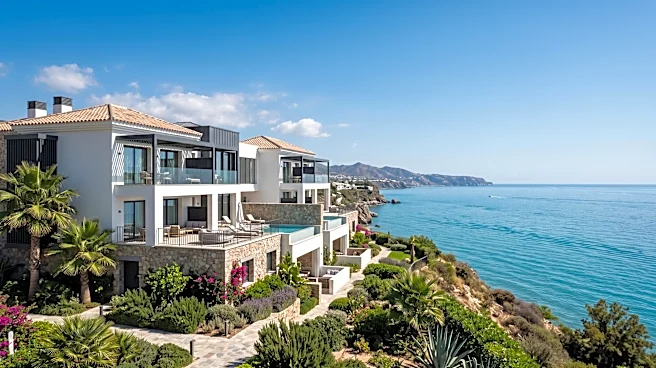
highlighted that while the Spanish and American clientele are significant for Marugal's hotels, the company actively diversifies nationalities to avoid over-reliance on a single market. He noted that the luxury hotel sector has seen substantial growth, driven by chains offering standardized luxury. However, Carrington advocates for 'differentiated luxury,' focusing on unique hotels that provide singular experiences rather than replicating concepts. He believes that Spain, as the second most desired destination globally, should leverage this position to attract a higher-spending tourist demographic rather than pursuing mass tourism. Carrington also pointed out that the Costa del Sol, a popular Spanish destination, has limited capacity for new hotels but significant potential for converting existing, outdated properties into higher-quality establishments.
Why It's Important?
Carrington's perspective is crucial for the U.S. tourism market and its perception of Spain as a destination. As American tourists constitute a significant portion of Marugal's clientele, a shift towards 'differentiated luxury' could enhance the appeal for high-spending U.S. travelers seeking unique and authentic experiences. This strategy could lead to a more sustainable and economically beneficial tourism model for Spain, potentially increasing the average spend per U.S. visitor. For U.S. investors and developers in the hospitality sector, Carrington's emphasis on converting existing properties rather than building new ones in saturated areas like the Costa del Sol offers a different investment paradigm. It suggests opportunities in renovation and repositioning of assets, aligning with a trend towards more sustainable and character-driven developments. The call for political courage to implement long-term strategies for quality tourism also resonates with broader discussions on responsible tourism development that could influence U.S. travel agencies and tour operators in their offerings.
What's Next?
Carrington's company, Marugal, plans to open new hotels in France by the end of the year, indicating continued expansion in the European luxury market. For Spain, the discussion around a tourist tax is gaining traction, which Carrington supports, provided the funds are used to improve citizens' quality of life and diversify the economy away from tourism dependence. This could lead to policy changes affecting the cost of travel for U.S. tourists. There is also a growing debate about limiting or prohibiting tourist rentals and offering incentives for local businesses to preserve social fabric, which could impact the availability and type of accommodation for U.S. visitors. The potential for cities like Seville to become 'theme parks' due to mass tourism, as warned by Carrington, may prompt local governments to adopt strategies similar to Barcelona or Venice to manage tourist influx and preserve authenticity. This could involve stricter regulations on tourist activities and accommodation, influencing the overall experience for American travelers.
Beyond the Headlines
The debate initiated by Carrington extends beyond mere economic considerations, touching upon the cultural and social fabric of Spanish cities. The concept of 'turismofobia' (tourism-phobia), where local residents express fatigue with mass tourism, highlights a growing tension between economic benefits and quality of life. This sentiment, if unaddressed, could lead to a backlash against tourism, potentially impacting the welcoming atmosphere that attracts U.S. visitors. The emphasis on preserving local crafts and independent businesses, rather than relying on international luxury brands, speaks to a deeper desire to maintain the unique character of Spanish regions. This cultural authenticity is often a key draw for discerning U.S. travelers seeking genuine experiences. The discussion also raises ethical questions about the responsibility of the tourism industry to local communities and the environment, pushing for a model that benefits both visitors and residents. The long-term shift towards quality over quantity could redefine Spain's brand as a destination, moving it from a mass-market option to a more exclusive and culturally rich experience for U.S. and international tourists.