



What's Happening?
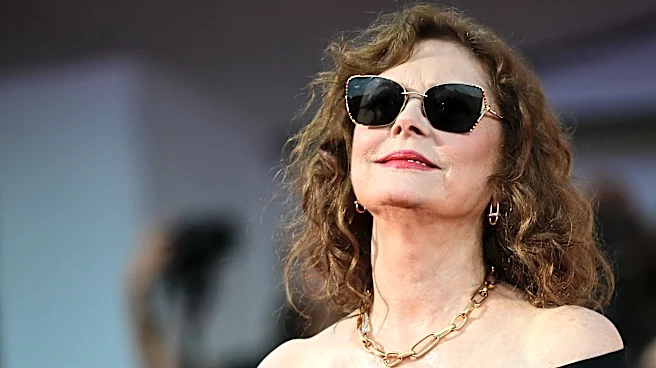
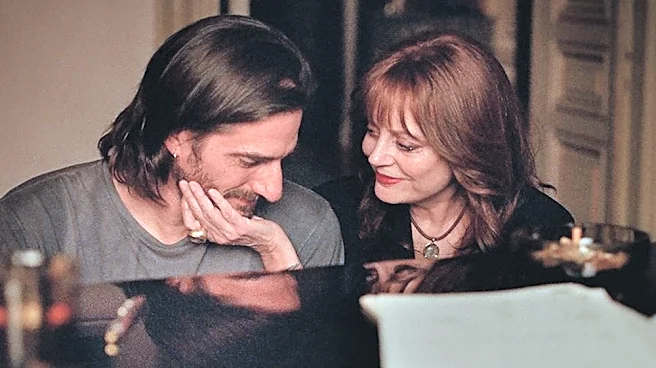
During a press conference for her film 'The Echo Chamber' at the Venice Film Festival, American actress Susan Sarandon stated that some agencies have advised studios against hiring her due to her public criticism of Israel and advocacy for Palestine.
Sarandon, an Oscar winner for 'Dead Man Walking' (1995) and a known activist, mentioned that she has recently been removed from some film projects because agencies are reportedly telling people not to hire her. Despite these alleged pressures, she believes that public perception regarding the historical relevance of Palestine and Zionism's ties to U.S. politics has shifted. She expressed feeling welcomed internationally, even as she faces hostility within the industry for her activism. Sarandon publicly thanked director Andrea Pallaoro for casting her in 'The Echo Chamber' despite warnings he reportedly received about her involvement.
Why It's Important?
This situation highlights the potential for political stances to impact careers within the U.S. entertainment industry, particularly concerning the Israeli-Palestinian conflict. Sarandon's claims suggest a chilling effect where artists might face professional repercussions for expressing views on sensitive geopolitical issues. This could lead to self-censorship among actors and other creative professionals, limiting the diversity of voices and perspectives in public discourse. The alleged blacklisting also raises questions about freedom of speech and expression within private industries, and whether such actions constitute a form of professional retaliation. For audiences, it could mean a narrower range of content and viewpoints if creators are pressured to conform to certain political narratives to secure work. The incident underscores the ongoing tension between artistic freedom and corporate interests in a politically charged environment.
What's Next?
It remains to be seen whether Sarandon's allegations will lead to formal investigations or public statements from the agencies or studios she referenced. Her public comments could prompt further discussion within the entertainment industry about the treatment of artists who engage in political activism. Other actors and industry professionals might come forward with similar experiences, potentially leading to a broader movement for greater protection of free expression in Hollywood. Conversely, the industry might largely remain silent, and Sarandon's career could continue to be affected by these alleged pressures. The incident could also influence how future film festivals and public platforms handle politically outspoken artists, potentially leading to more cautious approaches or, conversely, more robust defenses of artistic freedom. The ongoing debate surrounding the Israeli-Palestinian conflict will likely continue to intersect with the careers of public figures.
Beyond the Headlines
Sarandon's experience touches upon deeper issues of cancel culture and the weaponization of professional networks in response to political dissent. It raises ethical questions about the extent to which an individual's political views should impact their professional opportunities, especially in creative fields. The incident also reflects a broader societal trend where public figures are increasingly scrutinized for their personal beliefs, with significant professional consequences. This dynamic can lead to a climate of fear and conformity, potentially stifling artistic innovation and critical commentary. Furthermore, it highlights the power dynamics within the entertainment industry, where agencies and studios can exert considerable influence over an artist's career trajectory. The case could serve as a precedent for future discussions on the boundaries of free speech in professional contexts and the responsibilities of institutions to uphold or challenge those boundaries.