





What's Happening?
Researchers at the Southwest Research Institute (SwRI) have developed a novel method, the Electrical Interchangeability Index (EII), to determine when sodium-ion batteries can effectively replace lithium-ion cells in various applications. This initiative
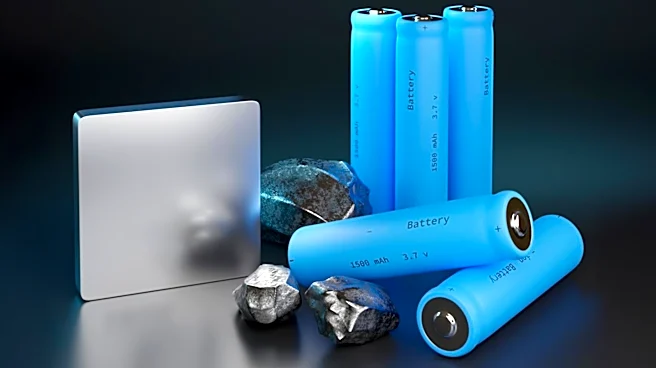
addresses the growing demand for cheaper and more abundant battery alternatives to lithium-ion, which currently powers a wide range of devices from smartphones to electric vehicles. Traditional comparison methods for batteries often examine individual specifications like capacity, voltage, or impedance in isolation. However, these methods do not fully assess whether two different battery technologies can perform the same application-specific tasks under identical operating conditions. The SwRI team conducted an internally funded project to test the substitutability of sodium-ion cells for 18650-format lithium-ion batteries, commonly used in laptops, power tools, and electric vehicles. Instead of focusing on separate specifications, they evaluated both cell types across a broad spectrum of operating conditions, measuring their performance in delivering and absorbing power. This comprehensive approach allowed them to identify 'high-EII' regions where the two battery types showed strong functional equivalence, exhibiting negligible differences in surface temperature rise, available capacity, and power capability. Conversely, 'low-EII' regions indicated scenarios where substitution would be unacceptable due to significant performance disparities.
Why It's Important?
The development of the Electrical Interchangeability Index (EII) by SwRI holds significant importance for U.S. industries and the broader economy, particularly in sectors heavily reliant on battery technology. Lithium-ion batteries, while effective, are characterized by high costs and increasing demand, prompting a search for more sustainable and economical alternatives. Sodium-ion batteries, which utilize more abundant and cheaper materials, present a viable solution, but their lower energy density and greater weight have historically complicated their widespread adoption as direct replacements. The EII provides a crucial tool for manufacturers and designers by offering a quantitative measure to assess the feasibility of integrating sodium-ion batteries into existing systems designed for lithium-ion technology. This can help reduce the need for extensive and costly redesigns, accelerating the adoption of sodium-ion technology in suitable applications. For U.S. businesses, this means potential cost savings in manufacturing, reduced reliance on potentially volatile lithium supply chains, and the ability to innovate with more diverse battery chemistries. The ability to identify when sodium-ion batteries can serve as alternative or secondary power sources without compromising performance can foster greater flexibility in product development and supply chain management, ultimately benefiting consumers through potentially more affordable and readily available electronic devices and electric vehicles.
What's Next?
The Electrical Interchangeability Index (EII) is poised to become a valuable tool for future battery design and manufacturing decisions. Manufacturers can utilize the EII to assess sodium-ion batteries as alternative or secondary sources for systems currently designed around lithium-ion technology. This will enable them to identify specific applications where substitution is possible without compromising performance or requiring significant system overhauls. According to Scott Sjovall, manager of Battery System Research and Innovation Section at SwRI, this initial work provides a structured and verifiable method to evaluate where new chemistries like sodium-ion can integrate into existing designs and where redesigns are necessary. From a business perspective, the EII can support critical decisions such as chemistry down-selection, qualification of second-source suppliers, and the assessment of alternative or hybrid battery technologies. This could lead to a more efficient and cost-effective transition towards sodium-ion batteries in appropriate sectors, reducing unnecessary system redevelopment efforts. The ongoing refinement and broader adoption of the EII could accelerate the commercial deployment of sodium-ion batteries in various applications, particularly in areas where their advantages in cost and material abundance outweigh their current limitations in energy density.
Beyond the Headlines
The introduction of the Electrical Interchangeability Index (EII) by SwRI extends beyond immediate manufacturing and cost benefits, hinting at deeper implications for technological independence and environmental sustainability within the U.S. The reliance on lithium-ion batteries has raised concerns about the geopolitical implications of lithium sourcing and the environmental impact of its extraction. By providing a robust framework for integrating sodium-ion batteries, the EII could contribute to diversifying the U.S. battery supply chain, reducing dependence on a single critical material. This diversification enhances national security by mitigating risks associated with supply disruptions and price volatility. Furthermore, sodium-ion batteries utilize more abundant and less environmentally intensive materials, aligning with broader sustainability goals. The EII's ability to precisely identify suitable applications for sodium-ion technology fosters a more intelligent and resource-efficient approach to energy storage. This could lead to a paradigm shift in how battery technologies are evaluated and deployed, moving towards a more application-aware design philosophy rather than a one-size-fits-all approach. Ultimately, this development could catalyze innovation in battery chemistry, encouraging further research into other alternative materials and chemistries, and fostering a more resilient and environmentally conscious energy landscape in the U.S.