


What's Happening?
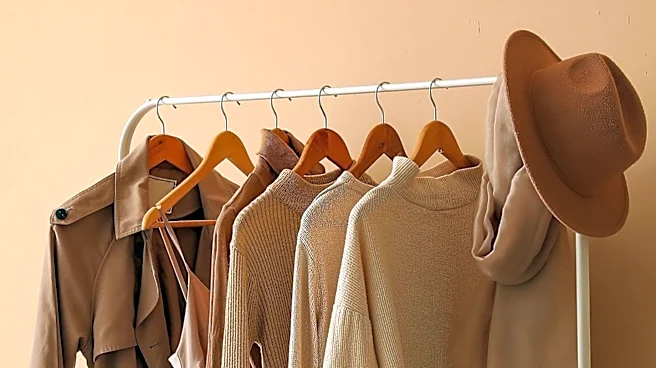
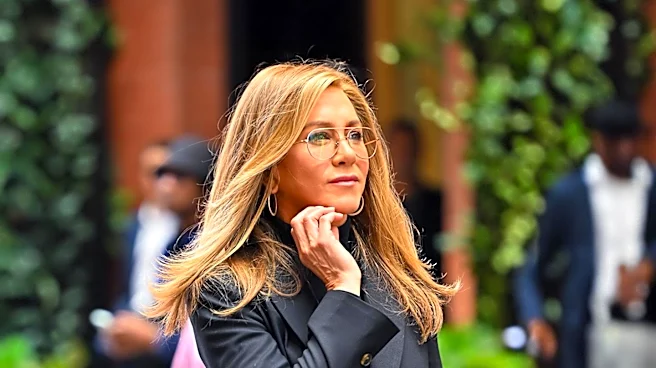
Jennifer Aniston has recently showcased 'pebble jeans' as a chic and subtle alternative to traditional blue denim. In a recent Instagram post, she was seen wearing utility-inspired jeans in a soft pebble hue, described as a shade between stone and warm
sand. This choice suggests a more refined and gentler option for cooler weather, contrasting with the usual dominance of mid-blue denim. The 'pebble jeans' draw inspiration from the workwear roots of denim, referencing early riveted work pants that came in both blue denim and sturdy brown cotton duck. Aniston's styling of these neutral-toned jeans with a pared-back black top highlights their versatility and effortless elegance.
Why It's Important?
Jennifer Aniston's endorsement of 'pebble jeans' can significantly influence fashion trends and consumer purchasing habits within the U.S. apparel market. As a style icon, her choices often lead to widespread adoption, potentially boosting demand for neutral-toned denim. This shift could impact denim manufacturers and retailers, prompting them to expand their offerings beyond traditional blue and black washes. The move towards 'pebble jeans' also reflects a broader trend in fashion towards more understated, versatile, and seasonless pieces, aligning with a desire for sophisticated yet comfortable attire. This can encourage consumers to explore different color palettes in their wardrobes, moving away from conventional denim choices and embracing more refined alternatives.
Beyond the Headlines
The popularization of 'pebble jeans' by Jennifer Aniston extends beyond a simple fashion trend; it taps into a deeper appreciation for historical context and subtle elegance in clothing. By referencing the workwear origins of denim, the 'pebble' hue connects modern fashion with a heritage of durability and practicality. This blend of historical authenticity with contemporary chic offers a compelling narrative for consumers. Furthermore, the emphasis on neutral tones suggests a move towards a more minimalist and sustainable approach to fashion, where versatile pieces can be styled in multiple ways across seasons. This trend encourages thoughtful consumption and investment in timeless garments, rather than fast fashion, reflecting a growing consumer preference for quality and longevity in their wardrobes.