






What's Happening?
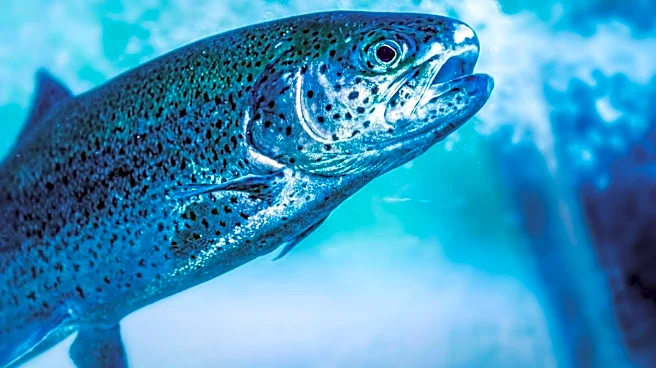
A new peer-reviewed study, a collaboration between Canadian biotechnology company Iconthin Biotech Corp., the University of Guelph, and Mitacs, has evaluated the effectiveness of microalgae-derived astaxanthin as an alternative pigment for rainbow trout
feed. The study found that AlgaeAsta® natural astaxanthin ingredients, derived from Haematococcus pluvialis, produced commercially desirable fillet coloration comparable to synthetic and bacterial astaxanthin. The research also highlighted differences in pigment retention and gut microbiome composition depending on the astaxanthin source and formulation. Specifically, AlgaeAsta® wall-broken powder showed the highest numerical retention of astaxanthin at 5.8%, compared to 4.39% for synthetic astaxanthin. All supplemented groups achieved commercially desirable SalmoFan™ scores of 27–28, indicating successful pigmentation.
Why It's Important?
This study is significant for the U.S. aquaculture industry as it offers a sustainable and potentially more cost-effective alternative to synthetic astaxanthin, which currently dominates the market for salmonid feed. The ability of microalgae-derived astaxanthin to produce comparable fillet coloration and retention rates suggests a viable path towards more environmentally friendly and natural feed ingredients. This could reduce reliance on synthetic chemicals, addressing growing consumer demand for natural products and potentially improving the health and sustainability profile of farmed fish. Furthermore, the influence of microalgal powder on gut microbial communities opens avenues for research into broader health benefits for fish, which could lead to improved feed efficiency and overall production performance in aquaculture operations, benefiting both producers and consumers.
What's Next?
Iconthin Biotech Corp. is actively seeking aquaculture and industry partners to conduct larger-scale trials in salmonid production. These trials aim to validate the study's findings under commercial conditions, establish practical inclusion rates for AlgaeAsta®, and assess the economic viability and measurable health and production benefits. The company, which received approval from the Canadian Food Inspection Agency (CFIA) for AlgaeAsta® in animal feed in Canada in 2026, plans a major expansion in 2027 to increase its annual production capacity to thousands of tons. This expansion is intended to support broader adoption of microalgae-based astaxanthin in aquaculture and other large-volume markets, potentially transforming the feed industry.
Beyond the Headlines
The development of microalgae-derived astaxanthin represents a broader trend towards bio-based alternatives in various industries. Beyond its application in aquaculture, Iconthin Biotech is exploring microalgae as a biological production platform for renewable ingredients across food, feed, dietary supplements, cosmetics, and personal care. This initiative underscores a shift towards sustainable sourcing and production methods, driven by environmental concerns and consumer preferences for natural products. The success of such ventures could reduce the ecological footprint of industrial processes and contribute to a more circular economy. The focus on production economics, achieved through strain domestication, microfluidic-assisted optimization, and advanced indoor closed cultivation, highlights the potential for innovative biotechnology to make sustainable alternatives competitive with conventional synthetic products.