




What's Happening?
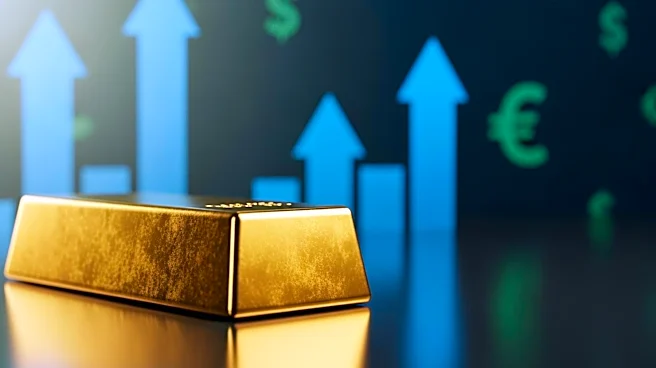
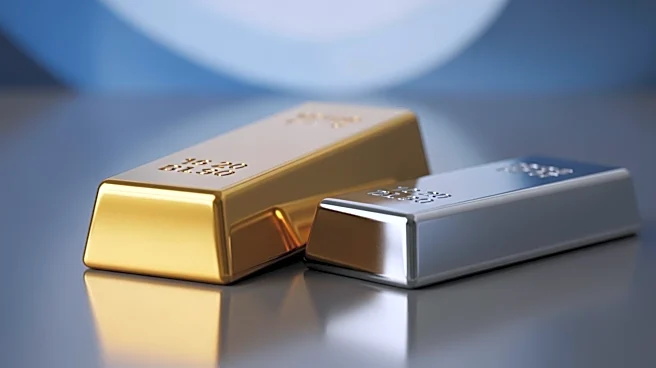
Gold prices have continued to decline, marking a third consecutive weekly loss as the Federal Reserve's hawkish stance and a strong U.S. dollar overshadow easing tensions between the United States and Iran. Spot gold fell 1.8% to $4,134.86 an ounce, while
August gold futures dropped 2.2% to $4,152.25 per ounce. The Federal Reserve's recent policy meeting reinforced expectations that interest rates may remain elevated longer than anticipated, with nine of the Fed's 19 policymakers indicating a potential rate increase before year-end. This has driven Treasury yields higher and strengthened the U.S. dollar, reducing the appeal of gold as a non-yielding asset. Additionally, uncertainty over U.S.-Iran talks has added to market volatility, as Vice President J.D. Vance suspended scheduled negotiations in Geneva, affecting the interim agreement aimed at reopening shipping routes through the Strait of Hormuz.
Why It's Important?
The decline in gold prices reflects broader economic trends influenced by the Federal Reserve's monetary policy and geopolitical developments. A stronger U.S. dollar makes dollar-denominated commodities like gold more expensive for international buyers, reducing demand. The potential for further interest rate hikes increases the opportunity cost of holding non-yielding assets such as gold, impacting investors' strategies. The suspension of U.S.-Iran talks adds uncertainty to the geopolitical landscape, affecting global trade routes and commodity prices. These developments have significant implications for investors, financial markets, and economic stakeholders, as they navigate the complexities of monetary policy and international relations.
What's Next?
Investors and market analysts will closely monitor the Federal Reserve's future policy decisions and any developments in U.S.-Iran relations. The potential for additional interest rate hikes could further impact gold prices and the broader commodities market. Additionally, geopolitical tensions and their resolution will play a crucial role in shaping market dynamics. Stakeholders will need to assess the implications of these factors on their investment strategies and economic forecasts.