



What's Happening?
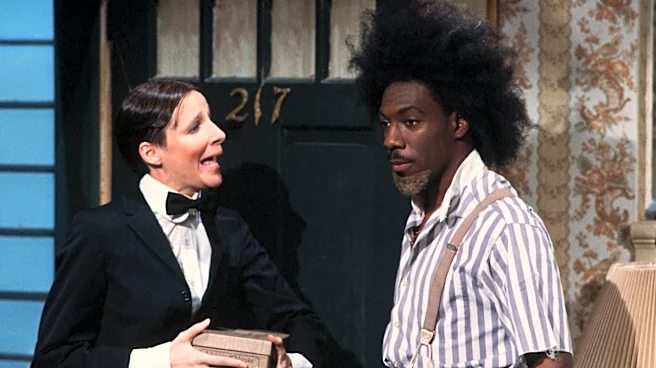
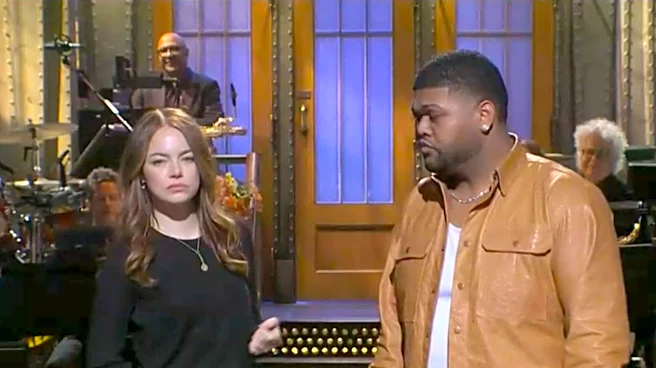
Actor Anthony Michael Hall has openly discussed his challenging experience as a cast member on "Saturday Night Live" (SNL) during its 11th season (1985-1986). Hall, who joined the show at just 17 years old after a string of successful 1980s films, described
the environment as "scary" and "wild." He noted the intense work schedule, which involved 12-14 hour rehearsal days and continuous writing from Monday to Wednesday. Hall, who was part of a cast that included Robert Downey Jr., Jon Lovitz, Damon Wayans, and Joan Cusack, felt a degree of welcome but also acknowledged the highly competitive nature of the show. He expressed that for years he was critical of his own performances, feeling he didn't have any standout sketches.
Why It's Important?
Anthony Michael Hall's reflections offer a rare glimpse into the demanding and often high-pressure environment behind one of television's most iconic shows. His account highlights the significant challenges faced by young actors, particularly those transitioning from film to live sketch comedy, and the intense scrutiny and self-doubt that can accompany such a prominent role. For aspiring comedians and actors, his story underscores the rigorous work ethic and competitive nature inherent in the entertainment industry. It also provides context for the evolution of SNL itself, showcasing the different eras and the varying experiences of its cast members. Hall's eventual acceptance of his past, particularly in light of an invitation to the SNL 50th Anniversary Special, speaks to the long-term impact and legacy of the show on its alumni.
What's Next?
Anthony Michael Hall has been invited to attend the "Saturday Night Live" 50th Anniversary Special in 2025. This event is anticipated to be a significant gathering of past and present SNL cast members, writers, and producers. For Hall, this invitation has provided an opportunity to re-evaluate his time on the show in a more positive light, allowing him to let go of previous self-criticism. The special will likely serve as a moment of collective reflection on SNL's enduring cultural impact and the experiences of its many contributors over five decades. It will also be a major television event, drawing significant viewership and media attention, celebrating the show's legacy and its influence on comedy and popular culture.
Beyond the Headlines
Hall's candid discussion about his SNL experience touches upon broader themes of professional identity and self-perception in the entertainment industry. His initial self-criticism, despite being part of a major television institution, illustrates the internal pressures artists face to constantly achieve and excel. The eventual shift in his perspective, influenced by the invitation to the 50th Anniversary Special, highlights the healing power of time and external validation. This narrative resonates beyond show business, speaking to anyone who has grappled with past professional challenges and the journey towards self-acceptance. It also underscores the unique psychological demands of live performance and the intense public scrutiny that comes with being on a show like SNL, which can shape an individual's self-worth for decades.