



What's Happening?
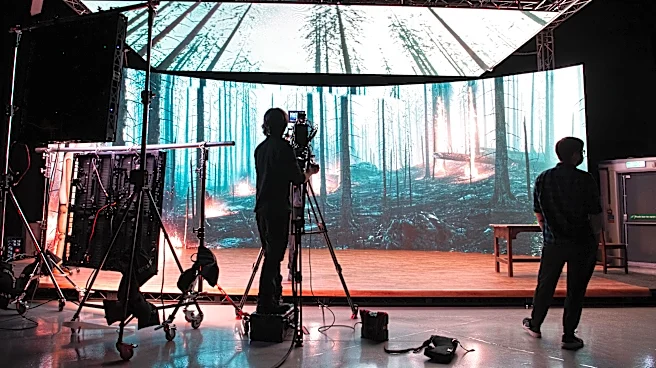
Amazon MGM Studios' upcoming film, 'Project Hail Mary,' directed by Phil Lord and Christopher Miller, has incorporated advanced LED technology from ROE Visual to create an immersive set. For the film, 400 new LED panels were supplied by ROE Visual to construct
two versions of the 'Don’t Go Crazy Room' at Shepperton Studios. This room is designed to surround actor Ryan Gosling's character with images of Earth, providing a crucial psychological anchor for an astronaut on a long-duration space mission. The production utilized two types of panels: Ruby1.9 for seamless backdrops that immerse the character, and transparent Vanish8 Touring panels, which allow the camera to see through the LED, indicating the room's technological nature. This dual approach aims to balance realism with the narrative's need for both immersive environments and visible technology. Cinematographer Greig Fraser noted that using LED screens instead of green screens enhances the honesty and reality of the images, allowing for a more tangible interaction between the actor, light, and environment.
Why It's Important?
The adoption of advanced LED technology in 'Project Hail Mary' signifies a growing trend in Hollywood towards virtual production, moving away from traditional green screen methods. This shift is important for the film industry as it allows filmmakers to capture more realistic lighting and reflections on set, directly impacting actor performances by providing tangible environments to react to. For technology providers like ROE Visual, this represents a significant market opportunity, showcasing their products' capabilities in high-stakes, visually demanding productions. The use of both opaque and transparent LED panels demonstrates innovative problem-solving in set design, pushing the boundaries of what's possible in cinematic storytelling. This approach can lead to more efficient post-production workflows and potentially higher quality visual effects, benefiting both production studios and audiences who experience more believable on-screen worlds.
What's Next?
The successful implementation of ROE Visual's LED panels in 'Project Hail Mary' is likely to encourage broader adoption of similar virtual production techniques across the film industry. As more filmmakers experience the benefits of on-set immersion and real-time visual feedback, demand for advanced LED technology and virtual production services is expected to grow. This could lead to further innovations in LED panel design, software integration, and virtual production workflows. Other studios and directors may look to replicate or evolve these methods, potentially establishing new industry standards for set construction and visual effects. The film's release will serve as a high-profile case study, influencing future production decisions and investment in virtual production infrastructure. Technology companies in this space will likely continue to develop more versatile and high-resolution LED solutions to meet evolving cinematic demands.
Beyond the Headlines
The integration of sophisticated LED technology in filmmaking extends beyond mere visual enhancement; it represents a fundamental shift in the creative process. By bringing digital environments directly onto the set, filmmakers can achieve a more organic interaction between actors and their surroundings, potentially leading to more nuanced performances. This method also blurs the lines between pre-production, principal photography, and post-production, as many visual elements are finalized in-camera. Ethically, this technology raises questions about the nature of 'reality' in film, as increasingly seamless digital environments become indistinguishable from physical sets. Legally, it could impact intellectual property rights for digital assets used in virtual sets. Culturally, as audiences become accustomed to these hyper-realistic visual experiences, it may elevate expectations for cinematic quality, pushing the industry towards even more technologically advanced storytelling methods.