
What's Happening?
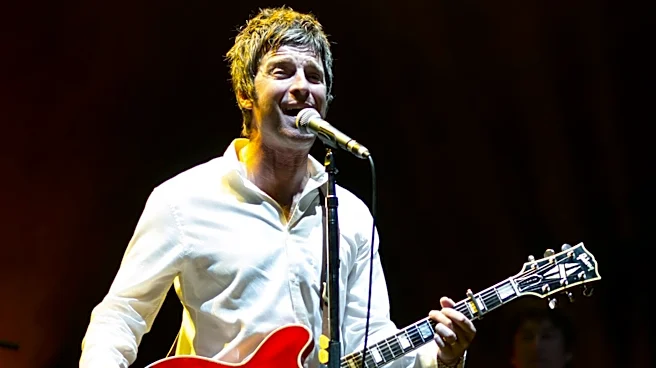
Noel Gallagher, a prominent figure in the band Oasis, has repeatedly voiced his strong dislike for the band's iconic song 'Wonderwall.' He has described the track as a 'pain in the arse,' a sentiment echoed
by his brother Liam Gallagher, who also dislikes performing it. According to the source, Noel resents how 'Wonderwall' became the defining identity of Oasis, overshadowing other, more ambitious works by the band. Both brothers are particularly frustrated by its ubiquity as an acoustic busker anthem. Despite its commercial success, which contributed significantly to their wealth, the song has become an artistic burden for the Gallagher brothers, trapping Oasis in a specific public perception they wished to transcend. This sentiment is not unique, as other artists like Radiohead with 'Creep' and Nirvana with 'Smells Like Teen Spirit' have also expressed similar frustrations with their most famous hits.
Why It's Important?
This situation highlights a common paradox in the music industry where an artist's most commercially successful work can become an artistic albatross. For Oasis, 'Wonderwall' provided immense financial success and global recognition, but it simultaneously limited their artistic freedom and public perception. This dynamic can lead to creative stagnation or resentment, as artists feel compelled to cater to audience expectations rather than explore new musical directions. The public's attachment to a specific hit can overshadow an artist's broader catalog, potentially hindering their long-term artistic development and personal satisfaction. This phenomenon affects not only the artists but also the music industry, as it influences how labels market artists and how audiences consume music, often prioritizing familiarity over innovation. The ongoing tension between commercial success and artistic integrity remains a significant challenge for many musicians.
What's Next?
While Noel Gallagher's disdain for 'Wonderwall' is well-documented, it is unlikely to diminish the song's popularity or its status as a cultural touchstone. The track will likely continue to be a staple at public events, radio stations, and among fans, regardless of the creators' feelings. For Noel and Liam Gallagher, their individual careers will continue to be viewed through the lens of their Oasis legacy, with 'Wonderwall' remaining a central, albeit contentious, part of that narrative. Future performances or interviews may continue to feature their candid opinions on the song, further solidifying its paradoxical role in their careers. The broader music industry will likely continue to grapple with the balance between promoting popular hits and fostering artistic growth, as this case exemplifies the potential pitfalls of overwhelming commercial success.
Beyond the Headlines
The 'Wonderwall' phenomenon delves into the deeper psychological and ethical implications of artistic creation and public consumption. Artists pour their creativity into their work, but once released, a song takes on a life of its own, shaped by public interpretation and commercial forces. The ethical question arises: do artists owe it to their audience to embrace their most popular works, even if they no longer resonate personally? This situation also touches upon the cultural impact of a single song becoming an anthem, often simplifying an artist's complex body of work into a single, easily digestible piece. The long-term shift triggered by such massive hits can be a double-edged sword, providing financial security but potentially stifling creative evolution and leading to a sense of being trapped by one's own success. It underscores the complex relationship between creator, creation, and audience.