



What's Happening?
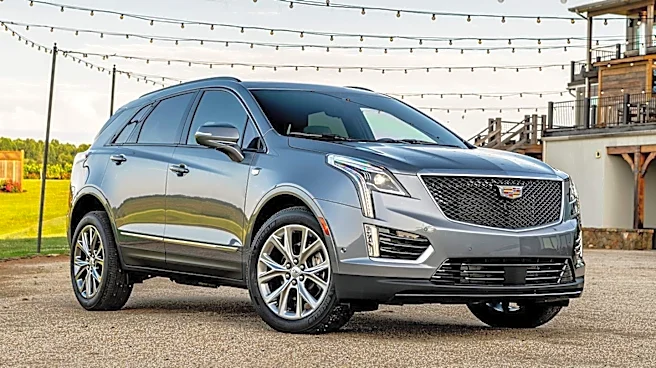
In the automotive retail sector, significant merger and acquisition (M&A) activities have occurred in Pennsylvania and Texas. In Newtown Square, Pennsylvania, the Hill family has sold two of its dealerships: Hill Buick GMC was acquired by RDS Automotive
Group, and Hill Cadillac was purchased by Piazza Auto Group. Haig Partners advised the sellers in these transactions. Geoffrey Hill Jr., president of Hill Buick GMC, expressed satisfaction with the outcome, emphasizing the importance of finding buyers who would uphold the legacy of their family-built businesses. Derek Garber, managing director at Haig Partners, noted the strong market interest for high-quality General Motors franchises. Concurrently, in Texas, Peters Autogroup has expanded its portfolio by acquiring All Star Ford in Longview. DSMA represented Peters Autogroup in this acquisition, highlighting their proactive approach to identifying off-market opportunities for buyers.
Why It's Important?
These dealership M&A activities reflect ongoing consolidation and strategic expansion within the U.S. automotive retail industry. For the acquiring groups, RDS Automotive Group, Piazza Auto Group, and Peters Autogroup, these acquisitions represent opportunities to increase market share, expand geographic reach, and potentially achieve economies of scale. The sales also indicate a trend where established family-owned dealerships are being acquired by larger groups, which can lead to changes in local employment and customer service approaches. The involvement of advisory firms like Haig Partners and DSMA underscores the complexity and strategic nature of these transactions, often involving significant capital and detailed market analysis. This consolidation can impact competition in local markets, potentially affecting vehicle pricing and service options for consumers. Furthermore, the automotive industry's political climate is cited as a headwind by dealers, suggesting that regulatory and policy changes could influence future M&A decisions and overall market stability.
What's Next?
The newly acquired dealerships will likely undergo integration into their respective new ownership structures. This could involve changes in operational management, branding, and customer service strategies. For RDS Automotive Group and Piazza Auto Group, the integration of Hill Buick GMC and Hill Cadillac will focus on leveraging the established reputations of these dealerships while aligning them with their broader corporate objectives. Similarly, Peters Autogroup will work to integrate All Star Ford into its existing network in Texas. These transitions typically involve assessing existing staff, implementing new systems, and potentially updating facilities. The continued M&A activity in the automotive retail sector suggests that further consolidation is probable, driven by factors such as market competition, economic conditions, and the evolving landscape of vehicle sales, including the increasing prominence of electric vehicles. Dealers will continue to monitor the political climate, which remains a top concern, as it can influence regulations, consumer demand, and business profitability.
Beyond the Headlines
The ongoing consolidation in the automotive dealership sector has broader implications for the industry's future. As larger groups acquire more dealerships, there's a potential for increased standardization of sales and service processes, which could lead to both efficiencies and a reduction in localized, independent dealer characteristics. This trend also raises questions about the long-term viability of smaller, family-owned dealerships in an increasingly competitive and capital-intensive market. From a consumer perspective, consolidation could mean fewer choices in terms of dealership ownership, but potentially more consistent service standards across a larger network. The strategic importance of these acquisitions also extends to manufacturers, as strong dealer networks are crucial for vehicle distribution and customer satisfaction. The political climate, as noted by dealers, can introduce uncertainties, influencing investment decisions and the overall health of the automotive retail ecosystem, particularly as the industry navigates the transition to electric vehicles and new sales models.