




What's Happening?
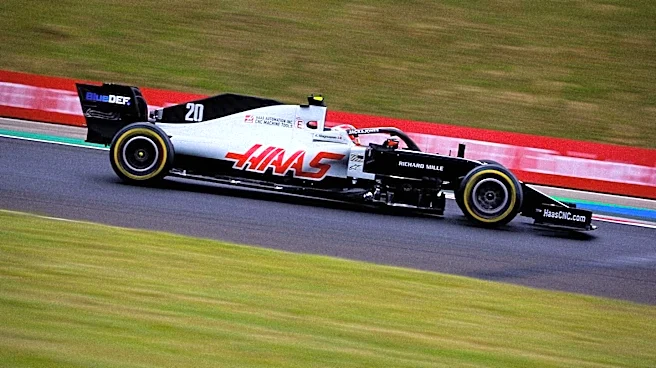
Gene Haas, the founder of the Haas Formula UK team, maintains complete control and ownership of the entity. According to Companies House, Haas is identified as the only active individual with significant control, possessing 75% or more of both the shares
and voting rights. The team itself further emphasizes this, describing Gene Haas as Formula 1's sole team owner. This ownership structure positions Haas as a unique case on the 2026 grid, representing a traditional proprietor-owned F1 team in an era where many teams have complex ownership models involving multiple share classes, sovereign wealth funds, private equity, and holding companies. This straightforward ownership contrasts sharply with other F1 teams like Aston Martin, Ferrari, Red Bull, Mercedes, McLaren, Cadillac, Audi, Alpine, and Williams, which feature intricate arrangements of investors, manufacturers, and private capital. The simplicity of Haas's ownership is highlighted as a relief amidst the increasingly sophisticated financial structures prevalent in modern Formula 1.
Why It's Important?
The sole ownership model of Gene Haas for the Haas Formula UK team carries significant implications for the team's operational strategy and financial management within the highly competitive Formula 1 landscape. Unlike other teams that navigate diverse investor interests and complex governance structures, Haas's singular control allows for direct and potentially more agile decision-making. This structure may contribute to the team's reported operation below the cost cap, suggesting a correlation between direct ownership and financial prudence. In an environment where F1 valuations are rapidly increasing and attracting varied investor interest, Haas's traditional model stands out. It demonstrates that a proprietor-owned team can still exist and compete, potentially offering a different approach to resource allocation and long-term vision compared to teams influenced by multiple stakeholders with potentially divergent objectives. This could impact the team's ability to adapt quickly to regulatory changes, technological advancements, and market shifts, as decisions are centralized under one individual.
What's Next?
While Gene Haas currently maintains sole ownership, the future of this traditional model in Formula 1 is subject to evolving market dynamics and increasing investor interest in the sport. The growing technical and commercial involvement of entities like Toyota with the Haas team, coupled with the overall surge in F1 valuations, suggests that external investment pressures may intensify. Although the ownership model remains simple for now, the trend across the grid indicates a move towards more diversified capital structures. Haas may face continued investor interest, potentially leading to considerations of partial sales or strategic partnerships to capitalize on rising valuations, similar to how other teams have brought in external capital without necessarily surrendering control. The longevity of this sole ownership will likely depend on Gene Haas's long-term vision for the team and its financial performance in a sport increasingly dominated by large corporate and institutional investors.
Beyond the Headlines
The unique ownership structure of the Haas Formula UK team, with Gene Haas as the sole proprietor, offers a deeper insight into the evolving philosophy of team management and financial sustainability in Formula 1. In an era where F1 teams are increasingly viewed as valuable assets attracting diverse forms of capital—from sovereign wealth funds to private equity—Haas represents a counter-narrative of direct, personal investment. This model potentially fosters a distinct team culture, emphasizing core racing objectives over broader commercial or investment returns that often drive multi-stakeholder entities. The ability of Haas to operate below the cost cap, while not explicitly linked to its ownership structure, suggests that a singular focus might enable more efficient resource allocation. This raises questions about the long-term viability and competitive edge of such traditional models against the financial might and diversified strategies of hybrid-owned teams, and whether the 'owner/operator' approach can continue to thrive amidst the sport's escalating financial demands and global appeal.