







What's Happening?
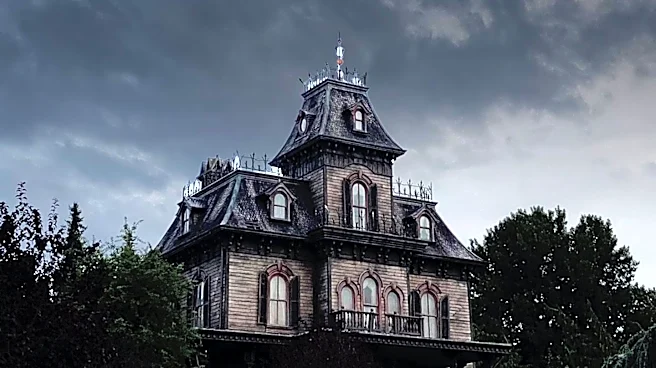
The Knight of Gore Haunted House, a family-run attraction in Gillette that has operated for six years, is facing potential closure this year. The issue stems from complaints by eight to ten neighbors regarding building materials and props being left on the
family's property year-round. Gillette Mayor Shay Lundvall confirmed that the city's enforcement of codes is complaint-based, and neighbors have expressed frustration over the property's appearance and traffic congestion on their narrow residential road, which they fear could impede emergency services. Kyla Colburn, who runs the haunted house with her husband KJ Colburn and friend Gabe Knowlton, stated that the city has issued thousands of dollars in code violation fines. A petition titled 'Keep Knight of Gore Alive!!' has been started by Kyla Colburn's sister, Kadesa Maki, garnering 1,366 signatures in support of the haunted house.
Why It's Important?
This situation highlights the tension between community entertainment initiatives and residential quality of life, particularly when home-based activities grow to a scale that impacts neighbors. For the Colburns, the haunted house is not just a passion project but also a significant fundraiser for the 'Blessings in a Backpack' charity, making its potential closure a loss for both local entertainment and charitable giving. The complaints about property aesthetics, traffic, and potential emergency access issues underscore common challenges faced by residential areas when commercial or large-scale recreational activities operate within them. The city's complaint-based enforcement policy means that long-standing issues can suddenly become critical once a sufficient number of complaints are lodged, forcing a reevaluation of how such activities fit within zoning and community standards.
What's Next?
The Colburns are exploring options to keep the Knight of Gore Haunted House operational, including compromising with the city or relocating the extensive building materials and props to another parcel of land that has been offered. They are also considering whether to discard the project entirely. The city officials have reportedly discussed the possibility of the haunted house operating on a donation-only basis to circumvent at-home business restrictions, which could trigger fire codes and other regulations. The outcome will likely depend on negotiations between the Colburns and the city, as well as the community's continued support, as evidenced by the petition. The situation may lead to a reevaluation of city ordinances regarding home-based businesses and large-scale residential activities.
Beyond the Headlines
This incident delves into the broader discussion of community identity and the role of local attractions. While some neighbors view the haunted house as a nuisance, many others in Gillette see it as a cherished community event, as indicated by the petition's strong support. This dichotomy reveals differing perspectives on what constitutes a desirable neighborhood environment and how public spaces should be utilized. The conflict also touches on the challenges of balancing individual entrepreneurial spirit and community engagement with the rights and expectations of residential property owners. The case could set a precedent for how Gillette, and potentially other similar communities, manages the growth of popular, non-traditional attractions within residential zones, prompting a deeper look into zoning laws, noise ordinances, and traffic management for such events.