


What's Happening?
Federal Reserve Vice Chair for Supervision, Michelle Bowman, stated in a November 10 speech that while the labor market has shown better-than-expected improvement this year, progress on lowering inflation has been disappointing. This sentiment comes as American
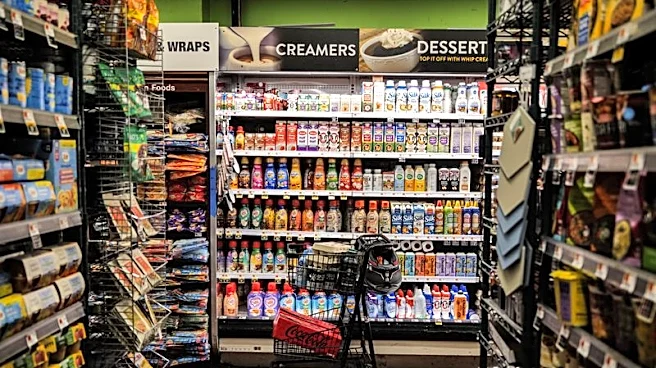
consumers face significant financial pressures, particularly from rising grocery bills. A new survey from market research firm Drive Research indicates that 68% of Black Friday shoppers cutting back this year cite increasing grocery costs as a primary reason, a notable increase from 57% in 2025. Overall living costs are a concern for 76% of shoppers, up from 70%, and 61% blame inflation, up from 54%. These factors are leading to shrinking Black Friday budgets, with 41% of shoppers expecting to spend less on holiday shopping than last year, compared to 31% in 2025. The share of those planning to spend $1,000 or more has also decreased from 24% to 18%.
Why It's Important?
The statements from a high-ranking Federal Reserve official like Michelle Bowman underscore the persistent challenge of inflation within the U.S. economy, despite efforts to stabilize it. The direct impact on consumer spending, particularly during a critical retail period like Black Friday, highlights how economic pressures are translating into tangible changes in household budgets. The data from Drive Research reveals a significant shift in consumer behavior, with essential costs like groceries now directly influencing discretionary spending. This trend could have broader implications for the retail sector, potentially leading to lower-than-anticipated holiday sales and forcing retailers to adapt pricing strategies. For the Federal Reserve, continued inflation, especially in everyday necessities, complicates monetary policy decisions, as it seeks to balance employment goals with price stability. The public's perception of economic strain could also influence consumer confidence and future spending patterns.
What's Next?
The Federal Reserve will likely continue to monitor inflation data closely, particularly in sectors like food and energy, which directly impact household budgets. Future monetary policy decisions, including potential adjustments to the benchmark interest rate, will be heavily influenced by whether inflation shows signs of moderating. Retailers, in response to reduced consumer spending and increased price sensitivity, may need to offer more aggressive discounts or focus on value-oriented products to attract shoppers. Consumers are expected to remain cautious with their spending, prioritizing essential goods and seeking out the best deals, as indicated by the trend of shoppers using price trackers. The ongoing economic environment suggests that the holiday shopping season may be more challenging for many businesses, while consumers will continue to feel the pinch of elevated living costs.
Beyond the Headlines
The current economic climate, as highlighted by Michelle Bowman's remarks and consumer behavior data, points to a deeper societal challenge beyond mere financial statistics. The increasing burden of grocery costs and overall living expenses is not just an economic indicator but a significant factor affecting the quality of life for many American families. This situation could exacerbate economic inequalities, as lower-income households are disproportionately affected by rising prices for necessities. The shift in Black Friday spending patterns also reflects a broader re-evaluation of consumerism, where practical needs are taking precedence over discretionary wants. This could lead to long-term changes in retail strategies, emphasizing value and essential goods. Furthermore, the public's growing skepticism about inflation control could erode trust in economic institutions if tangible improvements are not observed, potentially influencing political discourse and policy demands related to economic relief and stability.