




What's Happening?
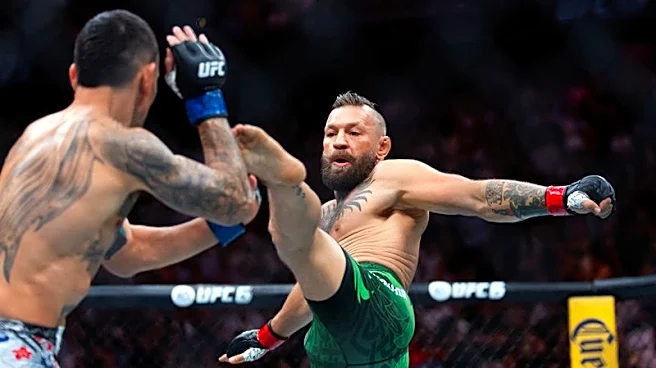
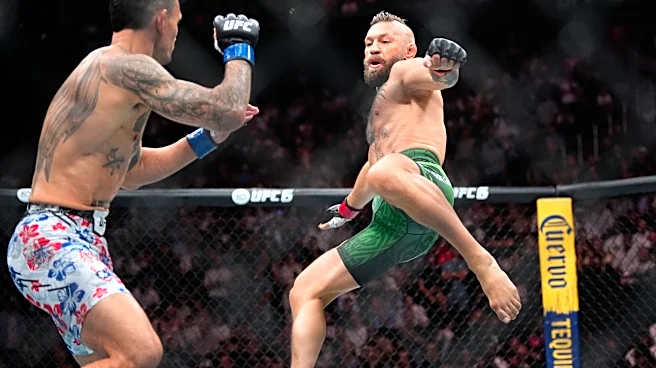
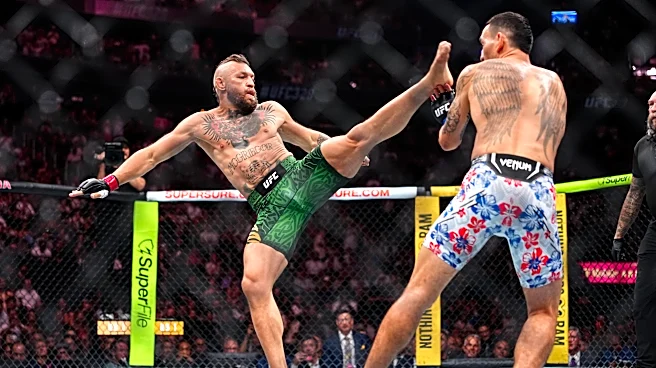
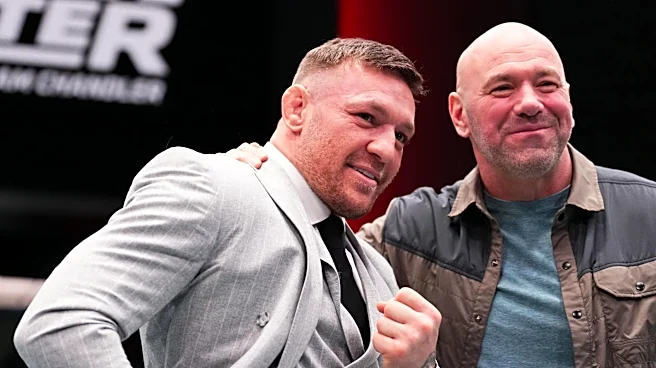
Conor McGregor, a prominent figure in mixed martial arts, revealed plans for surgery following a knee injury sustained during his UFC 329 fight against Max Holloway. The injury occurred early in the match when McGregor's right leg buckled during a jumping
roundhouse kick, leading to the fight's abrupt end after 69 seconds. McGregor, who has been out of the Octagon for five years, expressed his commitment to returning to martial arts practice and fulfilling the final fight of his UFC contract. His coach, John Kavanagh, noted that the kick was practiced without issue during training. Despite the setback, McGregor remains optimistic about his recovery and future in the sport.
Why It's Important?
McGregor's injury and subsequent surgery are pivotal for the UFC, as he is a major draw for audiences and a key figure in the sport's promotion. His fights generate significant betting activity and media attention, influencing the UFC's financial performance and fan engagement. The injury also underscores the physical challenges faced by fighters, potentially affecting how athletes and trainers approach preparation and risk management. McGregor's recovery and potential return will be closely monitored by fans, sponsors, and the UFC, as his presence in the sport continues to be a major influence on its popularity and commercial success.
What's Next?
McGregor will undergo surgery and begin rehabilitation, with the goal of returning to martial arts practice. The timeline for his recovery and return to competition is uncertain, with UFC President Dana White indicating that there are many unanswered questions. McGregor has a final fight scheduled for April 2027, which will be a focal point for his career and the UFC's promotional efforts. The outcome of his recovery will determine his ability to compete and potentially influence contract negotiations and future opportunities within the sport.