




What's Happening?
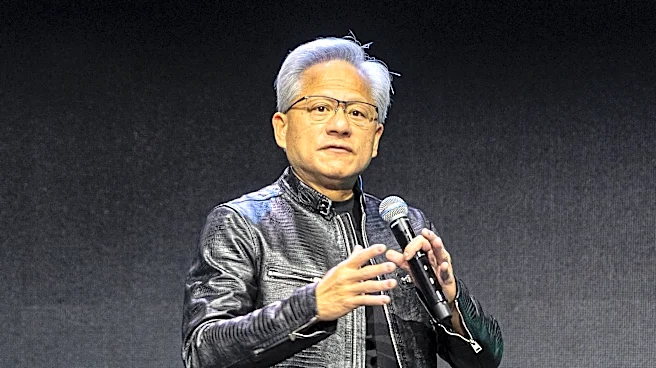
The Founders 100 ETF (FFF), managed by Michael Monaghan, Partner and Portfolio Manager at Founder ETFs, recently navigated significant market volatility concerning Nvidia. This volatility arose from the temporary departure and subsequent reinstatement
of Nvidia's CEO, Jensen Huang. The ETF's investment strategy mandates the removal of companies from its portfolio when their founders leave leadership roles. Consequently, Monaghan's team initially reduced its Nvidia holdings. However, following Huang's return, the fund restored its position in the company. This event served as a real-world test for the Founders 100 ETF's core philosophy, which posits that founder-led companies tend to deliver stronger long-term investment returns compared to those run by traditional corporate executives. The fund's approach is based on research spanning approximately 11,000 stocks over 30 years, indicating that visionary leadership, strategic execution, and corporate culture in founder-led businesses positively influence growth and shareholder returns.
Why It's Important?
This situation highlights the critical role of founder leadership in investment strategies, particularly for funds like the Founders 100 ETF. The fund's adherence to its rules, even amidst market uncertainty surrounding a major holding like Nvidia, underscores its commitment to its investment philosophy. The successful navigation of Nvidia's leadership changes and the subsequent restoration of its position could reinforce investor confidence in founder-led investment models. It also brings to light the potential risks associated with over-reliance on influential executives, even as it champions the benefits of founder involvement. For the broader U.S. economy and investment landscape, this event provides a case study on how specialized ETFs manage portfolio concentration risks and adapt to leadership transitions in high-growth sectors like artificial intelligence, offering an alternative perspective to traditional growth ETFs.
What's Next?
The Founders 100 ETF will likely continue to monitor leadership stability within its portfolio companies, especially those in rapidly evolving sectors. The experience with Nvidia could lead to further refinement of its risk management protocols concerning founder transitions. As investors reassess technology stock valuations and portfolio concentration risks, the performance of founder-led companies, as exemplified by the FFF, will be closely watched. The fund aims to identify investment opportunities across all 11 major sectors of the U.S. economy, beyond just technology and AI, including businesses like Waste Connections, Monster Beverage, and Capital One. This diversified approach suggests a continued focus on the broader applicability of the founder-led investment strategy as a compelling alternative in a dynamic market.
Beyond the Headlines
The Nvidia incident underscores a deeper discussion about the intrinsic value of founder vision and leadership in corporate success. While traditional corporate structures often emphasize professional management, the Founders 100 ETF's strategy suggests that the unique insights, long-term commitment, and cultural influence of founders can be a significant differentiator for sustained growth and innovation. This raises questions about the optimal balance between founder control and corporate governance, particularly as companies mature. The ethical implications of a fund's reliance on individual leaders also come into play, as the departure of a key founder can trigger significant portfolio adjustments and market reactions. This investment philosophy challenges conventional wisdom by prioritizing the human element of leadership as a primary driver of shareholder value.