



What's Happening?
Cyber Monday in 2025 marked a significant milestone for online retail, with U.S. consumers spending a record $14.25 billion, according to Adobe Analytics. This figure represents a 7.1% increase from the previous year, solidifying Cyber Monday's position
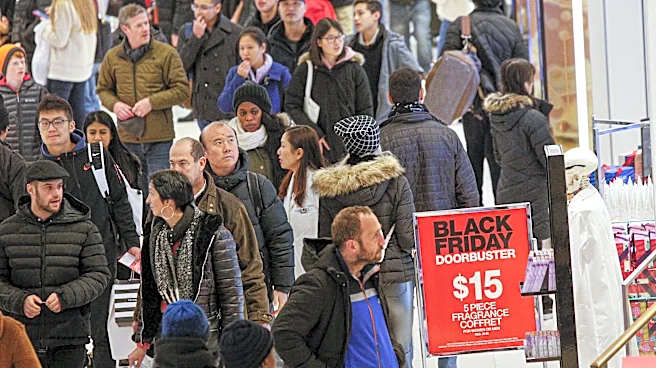
as one of the largest online shopping days of the holiday season. A key driver of this growth was the increasing reliance on mobile devices for purchases, which accounted for 57.5% of all online sales. This highlights a continuing trend of consumers utilizing smartphones for their holiday shopping needs. The event, which follows Thanksgiving and Black Friday, provides consumers with an additional opportunity to find deals on gifts and other items for holiday entertaining. Retailers, both large and small, participated, offering a wide array of discounts and promotions.
Why It's Important?
The record-breaking sales figures for Cyber Monday 2025 underscore the growing dominance of e-commerce in the U.S. retail landscape. The substantial increase in mobile shopping indicates a shift in consumer behavior, requiring retailers to optimize their online platforms for mobile accessibility and user experience. This trend impacts various sectors, from technology providers developing mobile shopping applications to logistics companies handling increased package volumes. For consumers, the event offers significant savings, but also necessitates vigilance against online scams, as highlighted by the Federal Trade Commission's recommendations for safe online shopping. The continued growth of Cyber Monday also influences traditional brick-and-mortar retail, pushing for integrated online and in-store strategies to capture consumer spending during the holiday period.
What's Next?
Looking ahead, the trend of increasing online sales and mobile shopping is expected to continue, with Cyber Monday likely to set new records in subsequent years. Retailers will likely further invest in mobile-first strategies, enhancing app functionality and mobile website performance to cater to the majority of online shoppers. Consumers can anticipate more sophisticated deals and personalized offers as retailers leverage data analytics. The blurring lines between Black Friday and Cyber Monday deals suggest that the holiday shopping period will continue to extend, with promotions starting earlier and lasting longer. Furthermore, the focus on online safety will remain paramount, with ongoing efforts from consumer protection agencies and retailers to educate shoppers about secure transaction practices and identifying fraudulent websites.
Beyond the Headlines
The sustained growth of Cyber Monday reflects broader societal shifts towards digital convenience and instant gratification. The reliance on mobile devices for such a significant portion of sales points to the pervasive integration of smartphones into daily life, transforming how consumers interact with brands and make purchasing decisions. This also raises questions about digital equity and access, as not all demographics have equal access to reliable internet and smartphones, potentially creating a divide in access to deals. Environmentally, the surge in online shopping and subsequent package deliveries contributes to increased carbon footprints, prompting discussions around sustainable shipping practices and packaging. The event also highlights the evolving nature of work in the retail sector, with a greater emphasis on e-commerce logistics and digital marketing roles.