





What's Happening?
Renowned filmmaker Agnieszka Holland has directed 'Green Border,' a film born from her strong reaction to the treatment of migrants at the Poland-Belarus border. The movie, which has received positive reviews for its authenticity, delves into the complex
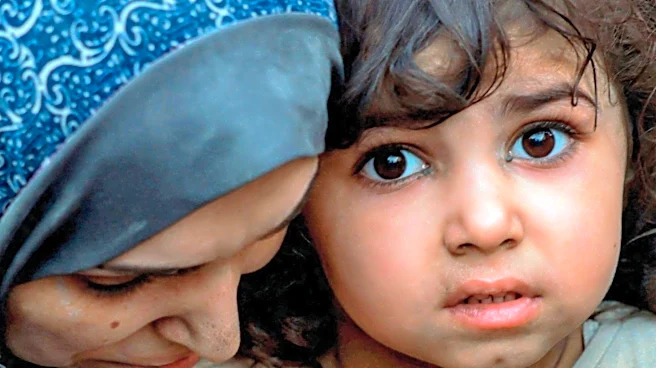
moral, ethical, social, and political issues surrounding the crisis. Holland's generation of filmmakers in Poland felt a responsibility to address global problems and difficult subjects. The scenario for 'Green Border' was developed at Holland's request, with nearly every event depicted having a basis in reality. The director and her co-authors, Gabriela Łazarkiewicz-Sieczko and Maciej Pisuk, meticulously researched and verified their sources, gathering testimonies from individuals on both sides of the border. The film aims to portray the harsh realities faced by migrants caught in this geopolitical situation.
Why It's Important?
Agnieszka Holland's 'Green Border' is important because it brings a critical artistic lens to a significant humanitarian crisis at the Poland-Belarus border, a situation that has broader implications for international relations and human rights. By depicting the plight of migrants with authenticity, the film can raise global awareness and potentially influence public opinion and policy discussions regarding refugee treatment and border management. The film's focus on the moral and ethical dilemmas faced by those involved, from migrants to border guards and humanitarian activists, highlights the human cost of political tensions. This cinematic exploration can serve as a powerful tool for advocacy, encouraging a more compassionate and effective response to similar crises worldwide. The film's reception and potential impact underscore the role of art in shaping societal understanding and driving social change.
What's Next?
The release and continued screening of 'Green Border' are likely to spark further discussions and debates about the migrant crisis at the Poland-Belarus border and broader European immigration policies. The film's critical acclaim and focus on authenticity could lead to increased scrutiny of the actions of governments and border agencies involved. It may also inspire humanitarian organizations and activists to intensify their efforts in advocating for the rights and welfare of migrants. Depending on its reach and impact, 'Green Border' could influence future artistic endeavors that tackle similar sensitive geopolitical issues, encouraging filmmakers to use their platforms to shed light on underreported or controversial events. The film's journey through festivals and public screenings will continue to shape its legacy and potential for real-world influence.
Beyond the Headlines
Beyond its immediate narrative, 'Green Border' delves into the profound ethical and cultural dimensions of human displacement and state responsibility. The film implicitly questions the moral obligations of nations and individuals when confronted with humanitarian crises, particularly when political motives intersect with human suffering. It highlights the psychological toll on both migrants and those tasked with enforcing border policies, revealing the dehumanizing effects of such situations. The film's commitment to authenticity, based on extensive research and testimonies, underscores the power of storytelling to bridge empathy gaps and challenge dominant narratives. This approach can foster a deeper understanding of the complexities of migration, moving beyond simplistic political rhetoric to explore the shared humanity and individual struggles at the heart of such events. It also serves as a reminder of the historical role of cinema in documenting and commenting on significant social and political upheavals.